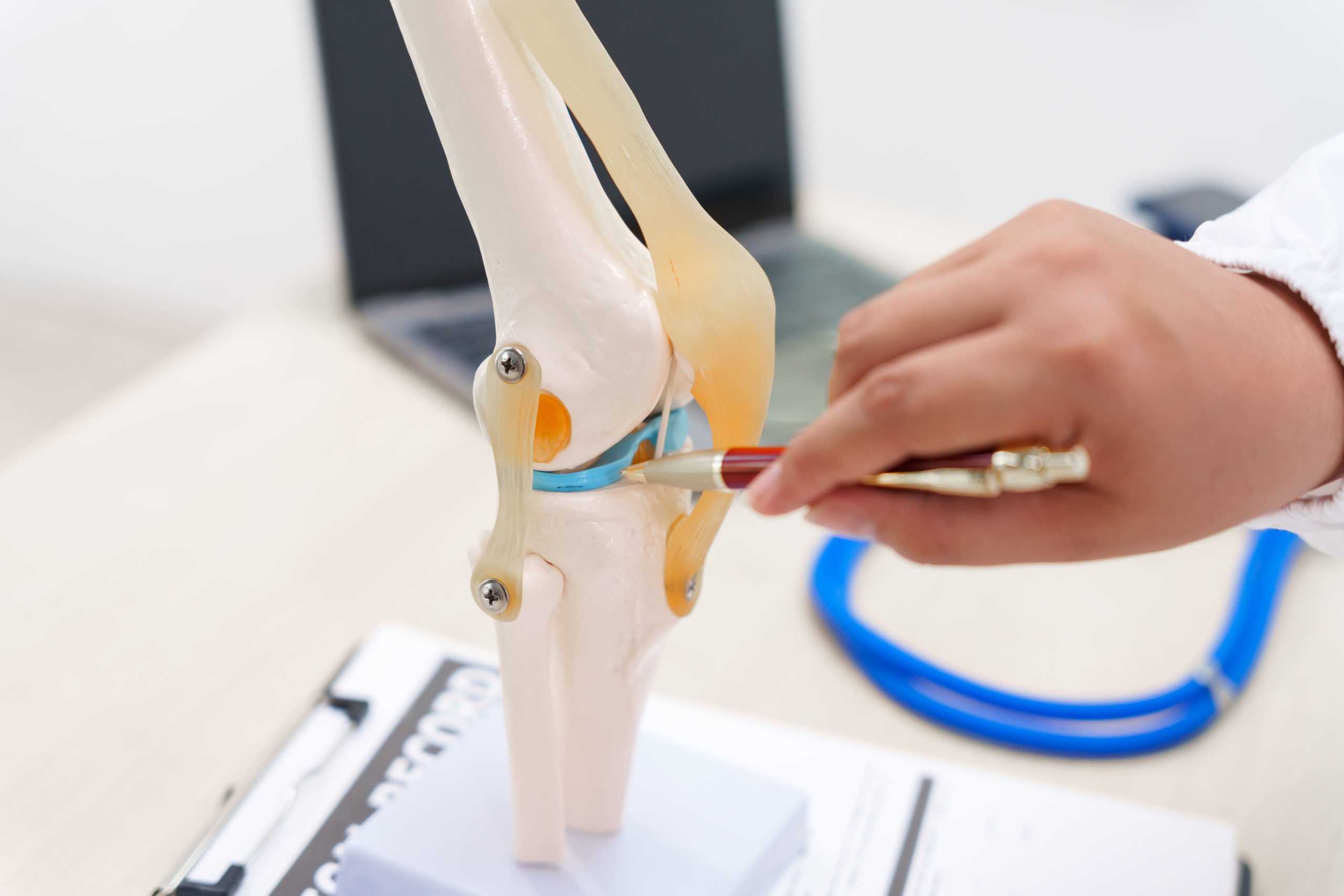
Your Anterior Cruciate Ligament (ACL) graft regains strength gradually, and although you may feel ready earlier, the tissue is not fully prepared for high demands at six months. Healing involves revascularisation, cellular repopulation, and collagen remodelling—processes that take time and cannot be accelerated.
Recovery timelines vary based on factors such as graft type, surgical technique, and rehabilitation progress. The milestones outlined are functional goals that guide progression, rather than fixed time-based checkpoints.
Week 1-2: Acute Post-Operative Phase
The immediate post-operative period focuses on wound healing, pain control, and the prevention of complications. Swelling peaks around days 3-5. Your knee will feel stiff and uncomfortable. This is normal and expected.
Pain management involves prescribed medications taken on schedule rather than waiting until severe pain occurs. Elevation above heart level for most of the day reduces swelling more effectively than intermittent elevation. Ice application for 20 minutes every 2-3 hours during waking hours provides additional relief.
Weight-bearing status depends on your surgeon’s protocol and any concurrent procedures (such as meniscus repair, where the surgeon also repairs the cushioning cartilage between your knee bones). Many isolated ACL reconstructions allow immediate weight-bearing as tolerated with crutches. The brace, typically locked in extension (straightened), protects the graft during walking.
Recommended exercises during this phase:
- Ankle pumps every hour to promote circulation
- Quadriceps sets (tightening thigh muscles while lying down)
- Straight leg raises once you can maintain knee extension
- Passive knee extension (heel propped on a towel roll, allowing gravity to straighten the knee)
Achieving full passive knee extension (0 degrees—meaning your knee can straighten completely) should be prioritised from day one. Most protocols aim to have this well underway by the end of week 2 and fully established by week 4. Loss of extension becomes increasingly difficult to regain over time and affects long-term function.
Week 3-6: Early Rehabilitation Phase
Swelling decreases but remains present. You’ll transition from pain management to active rehabilitation. You will typically begin formal physiotherapy if not already started.
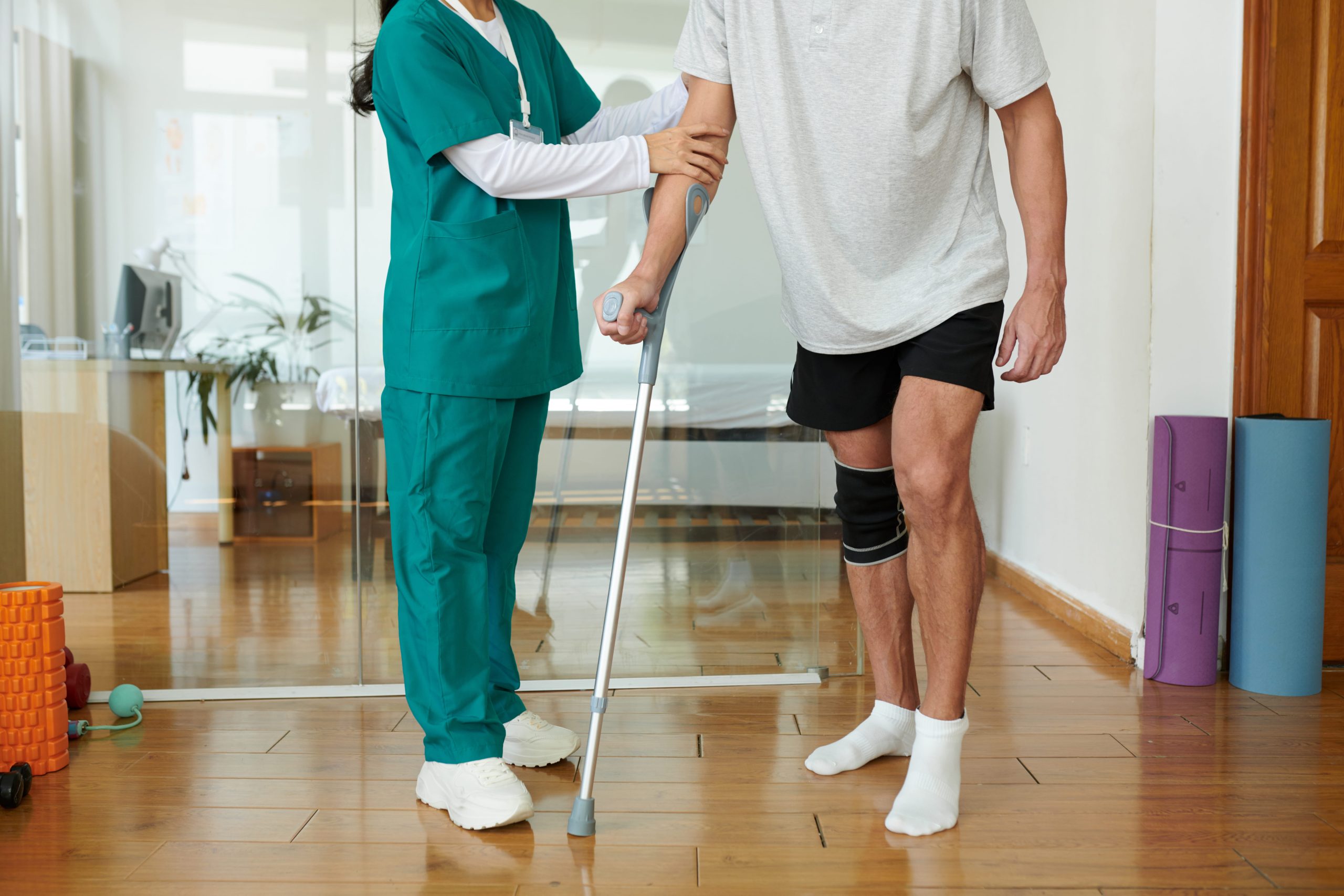
Gait normalisation (restoring your normal walking pattern) becomes the priority. You should progress from two crutches to one crutch (opposite side) to no crutches as strength permits—usually by weeks 4-6. Walking with a limp reinforces abnormal movement patterns. These patterns become harder to correct later.
Range of motion targets:
- Full extension (0 degrees—knee completely straight) maintained
- Flexion (bending) progressing to 90 degrees by week 4
- Flexion reaching 120 degrees by week 6
Quadriceps activation (the ability to voluntarily contract your thigh muscles) often remains inhibited due to arthrogenic muscle inhibition (AMI)—a process where joint swelling, surgical trauma, and altered nerve signalling reduce the brain’s ability to fully activate the muscle. Neuromuscular electrical stimulation (NMES—a device that uses electrical pulses to stimulate muscle contraction), combined with voluntary contraction, helps overcome this inhibition.
Stationary cycling begins once you achieve approximately 100-110 degrees of flexion—enough to complete a full pedal revolution. Start with the seat raised high and minimal resistance.
Week 7-12: Progressive Strengthening Phase
The graft is healing but remains vulnerable. External stability feels improved. Daily activities become easier. The focus shifts to rebuilding lower limb strength symmetry.
Exercise progression includes:
- Leg press (limited range initially, progressing to full range)
- Partial squats advancing to deeper squats
- Step-ups and step-downs of increasing height
- Hamstring curls (important for dynamic knee stability)
- Core strengthening and hip stabilisation exercises
Functional milestones by week 12:
- Walking without a visible limp on all surfaces
- Climbing stairs with normal pattern (foot over foot, not step-to)
- Full range of motion (0-135 degrees or matching opposite knee)
- Single-leg balance for 30 seconds with eyes open
Swimming (freestyle kick) and deep-water running may begin around weeks 8-10. Avoid breaststroke kick, which stresses the healing graft.
Month 4-6: Advanced Strengthening and Early Agility
Your knee feels increasingly normal during daily activities. The rehabilitation challenge shifts to rebuilding strength for higher-demand activities and introducing controlled agility work.
Strength benchmarks to achieve (your physiotherapist will set specific targets based on your individual progress and baseline):
- Isokinetic strength testing (quadriceps and hamstrings reaching a high level of symmetry with the opposite leg — your physiotherapist and surgeon will define the specific threshold required for clearance)
- Hop test battery (single hop, triple hop, crossover hop, timed hop — reaching a high level of symmetry, as determined through objective testing)
- Single-leg press for multiple repetitions
- Single-leg squat with good form and control
Running preparation begins with progressive treadmill walking, increasing speed incrementally.
Actual jogging may begin as early as 8–12 weeks post-surgery in patients who meet objective criteria, though many individuals begin a structured jogging programme between months 3–5, depending on graft type and rehabilitation progress.
- No swelling after exercise
- Full range of motion
- Adequate single-leg strength
- Normal walking pattern
Initial running is straight-line only on flat surfaces, with a warm-up period before intensity. Running every other day allows tissue adaptation.
Month 6-9: Sport-Specific Training Begins
The graft has matured significantly but continues to strengthen. Athletes begin sport-specific drills. Non-athletes focus on returning to recreational activities.
Agility progression follows a sequence
- Forward and backwards running
- Side shuffles and carioca drills
- Jumping and landing mechanics (introduced early to identify and correct high-risk movement patterns before cutting loads are applied)
- Figure-8 patterns (large to small radius)
- Cutting drills at 45 degrees, then 90 degrees
- Deceleration and acceleration drills
Criteria before advancing to cutting and pivoting:
- Quadriceps strength at a substantial level compared to the opposite leg
- Single-leg hop distance at a substantial level compared to the opposite leg
- No giving way or instability episodes
- Confidence in the knee during activities
Non-contact practice or modified sport participation may begin toward the end of this phase for athletes progressing well.
Month 9-12: Return to Sport Preparation
Full graft maturation continues. The final phase emphasises sport-specific conditioning, building confidence, and passing objective return-to-sport criteria.
Return-to-sport testing typically includes:
- Isokinetic strength testing (specialised equipment that measures muscle strength at different speeds—quadriceps and hamstrings at a substantial level compared to the opposite leg)
- Hop test battery (single hop, triple hop, crossover hop, timed hop—all at a substantial level of symmetry)
- Functional movement screening
- Sport-specific agility testing
- Psychological readiness assessment
Progressive return involves:
- Full training without restrictions
- Non-contact scrimmage
- Full contact practice
- Competition with reduced minutes
- Unrestricted return
Athletes who meet objective criteria AND feel psychologically ready demonstrate lower re-injury rates compared to those who return based on time alone or surgeon clearance without testing.
What Our Orthopaedic Surgeon Says
A common challenge I see is patients progressing based on how their knee feels rather than on objective markers. Your knee will feel ready for activities long before the graft can safely handle those loads. Patients who follow the rehabilitation protocol closely and meet each milestone before advancing have better outcomes than those who rush. The biology of healing doesn’t negotiate with impatience.
Factors That Influence Your Recovery Speed
Graft type affects early rehabilitation and, for most comparisons, shows similar long-term functional outcomes. Differences in donor-site morbidity and specific strength recovery patterns vary by graft, and your surgeon’s recommendation will reflect your individual anatomy and activity level.
Pre-operative condition significantly impacts recovery. Patients who enter surgery with a full range of motion, minimal swelling, and good quadriceps function recover faster compared to those who have surgery on an acutely injured, swollen knee.
Age influences healing speed and tissue quality. Active older adults can achieve good outcomes when expectations are appropriate. Younger patients heal faster but also have higher re-injury rates, often due to earlier return to high-risk activities.
Rehabilitation adherence is perhaps the most modifiable factor. Consistent attendance at physiotherapy and completion of home exercises correlate strongly with better outcomes.
Associated injuries such as meniscus repairs or cartilage procedures may require modifications to the standard protocol. These modifications often slow certain aspects of progression.
When to Seek Professional Help
- Increasing pain or swelling after the first week rather than gradual improvement
- Fever, wound redness, warmth, or drainage suggesting infection
- Calf pain, swelling, or tenderness that could indicate a blood clot
- Sudden giving way or instability after a specific incident
- Inability to straighten your knee fully despite consistent effort
- Catching, locking, or mechanical symptoms
- Significant setback after a fall or awkward movement
Commonly Asked Questions
Can I drive after ACL reconstruction?
For right-knee surgery with automatic transmission, most patients can drive at 4–6 weeks, once off narcotic medications and demonstrating adequate reaction time. Patients with patellar tendon autografts may require additional time due to the demands of braking on the quadriceps mechanism. Left-knee surgery with automatic transmission allows earlier return, often at 2–4 weeks, though this may vary depending on graft type and individual recovery progress. Surgeon clearance is required before resuming driving.
How long until I can return to the gym?
You can begin upper-body exercises within days if you can safely access equipment. Leg exercises restart gradually—typically stationary bike at 2-3 weeks, leg press at 4-6 weeks, and squats progressing from partial to full depth over months 2-4. Avoid loaded deep squats and leg extensions with heavy resistance for several months.
Will my knee ever feel completely normal?
Many patients describe their knee as nearly normal after full recovery. Occasional awareness during weather changes or prolonged activity is common. Kneeling discomfort occurs in some patients, particularly with patellar tendon grafts. Functionally, well-rehabilitated knees perform at high levels. Subtle differences may persist.
What are the chances of re-tearing the graft?
Re-injury rates vary by population. Younger athletes returning to cutting and pivoting sports are at the highest risk. Completing comprehensive rehabilitation and meeting objective return-to-sport criteria before resuming high-risk activities reduces the risk of reinjury. Patients who return before 9 months have higher re-injury rates regardless of how their knee feels.
Is it normal to have setbacks during recovery?
Minor setbacks are common and expected. A day of increased swelling after pushing too hard, temporary stiffness after prolonged sitting, or brief discomfort with new exercises all fall within normal variation. The pattern should show overall improvement over weeks, even if individual days fluctuate.
Next Steps
Successful ACL reconstruction recovery requires achieving objective milestones in sequence: restore full extension first, then flexion, then strength symmetry, then sport-specific function. Progression should be guided by objective measures—strength testing and hop tests, rather than how the knee feels. Patients who return to high-risk activities before nine months have elevated re-injury rates regardless of subjective confidence.
If you are experiencing knee instability, giving way episodes, or difficulty returning to sport or recreational activities after an ACL injury, consult with an orthopaedic specialist to discuss your reconstruction and rehabilitation options.