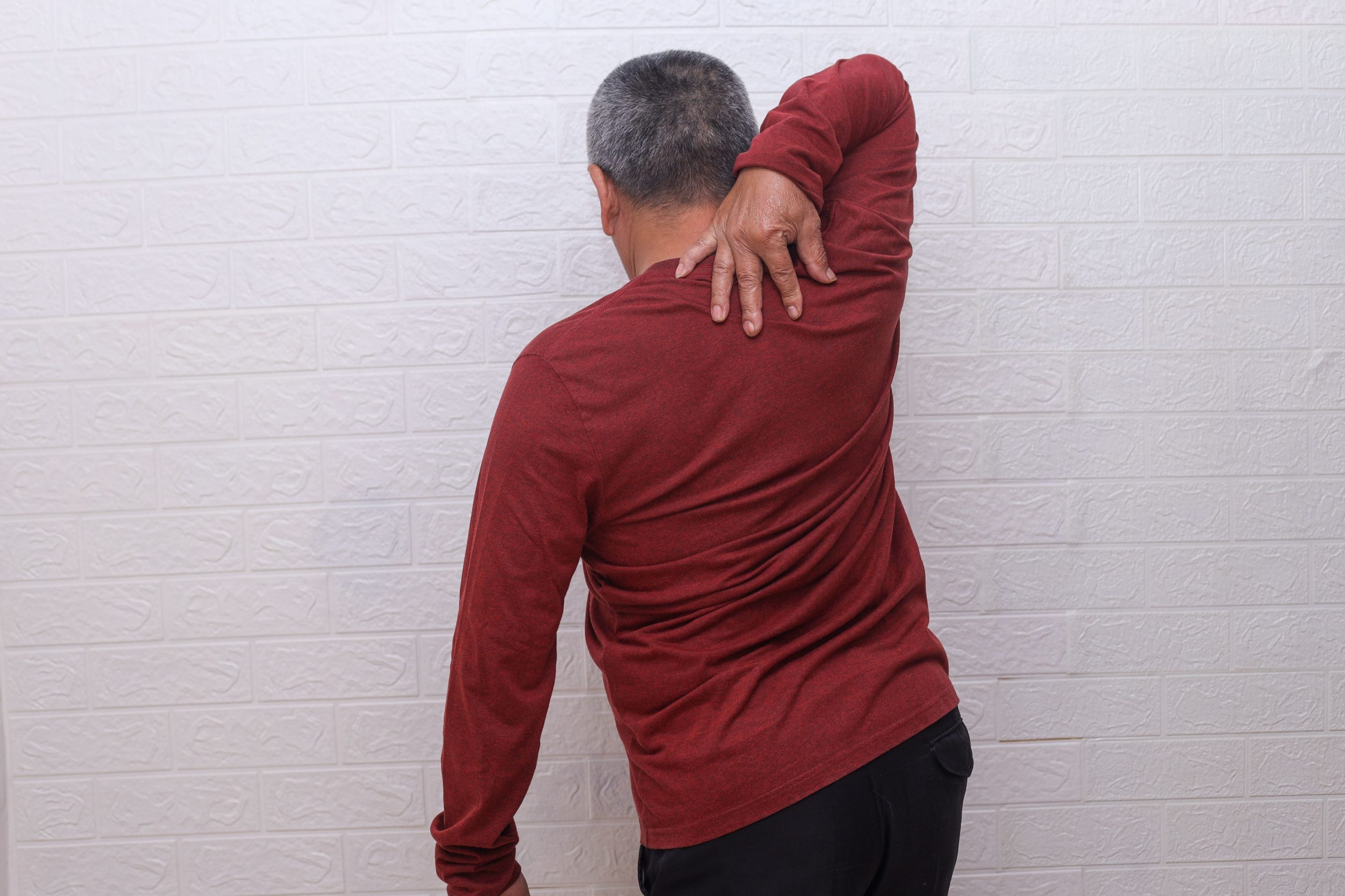
Shoulder pain can make even simple tasks frustrating: reaching for a shelf, fastening a seatbelt, or sleeping through the night. Many people look for ways to manage shoulder pain at home before deciding whether to see a doctor. This guide covers commonly recommended home strategies and helps you recognise when to seek professional assessment.
Mild shoulder pain may ease with a combination of activity modification, gentle movement, short-term use of heat or cold, and over-the-counter pain relief. The RICE method (rest, ice, compression, elevation) is often mentioned for acute injuries, although compression and elevation are less practical for the shoulder, and some guidance advises avoiding ice and anti-inflammatory medicines in the first days. If shoulder pain persists, worsens, or is accompanied by other symptoms such as swelling, deformity, or loss of function, it is important to seek professional assessment from a healthcare provider.
To learn more about managing shoulder pain and when to consult a shoulder specialist in Singapore, see the sections below.
Practical Ways to Relieve Shoulder Pain at Home
Shoulder pain can range from a dull ache after a long day at a desk to a sharp, activity-limiting discomfort following a sports session or awkward movement. Home care is a reasonable first approach for mild to moderate symptoms.
Understanding What May Be Causing Your Shoulder Pain
The shoulder is one of the most mobile joints in the body, which also makes it one of the more vulnerable to injury and irritation.
Overuse and muscle tension
Repetitive movements (typing, overhead lifting, swimming, or carrying a heavy bag on one side) can cause muscle fatigue and tension around the shoulder. This type of pain tends to feel like a generalised ache or tightness and often improves with rest and gentle movement.
Rotator cuff irritation or minor tears
The rotator cuff is the group of muscles and tendons that wrap around the shoulder joint to stabilise it and allow lifting and rotation. Irritation or small tears in these structures are a common source of shoulder pain, particularly in active individuals and those who perform repetitive overhead tasks. Pain when lifting the arm to the side or reaching behind the back may be associated with a rotator cuff injury or shoulder impingement.
Frozen shoulder and joint stiffness
Frozen shoulder (also called adhesive capsulitis) develops when the tissue surrounding the shoulder joint becomes inflamed and tightens, gradually restricting movement. It often begins with aching pain and progresses to noticeable stiffness. The condition can develop slowly over months and is more common in people who have had a period of reduced shoulder activity, or in those with certain health conditions such as diabetes.
When the cause is less obvious
Not all shoulder pain originates in the shoulder itself. Tension in the neck, referred pain from the cervical spine (the neck vertebrae), or issues with surrounding structures can create discomfort that feels like it is coming from the shoulder. If pain is accompanied by neck stiffness or radiates down the arm, mentioning this to a healthcare professional may be helpful.
Immediate Relief for Shoulder Pain
In the first few days after shoulder discomfort begins, it may help to rest the shoulder from aggravating activities while avoiding long spells of not moving it at all. Many people find that moving the shoulder gently within a comfortable range several times a day helps limit stiffness. After about 72 hours, slowly return to normal activity, avoiding sports or heavy lifting until discomfort has eased and movement has recovered. Recommendations vary between health services, so a pharmacist or doctor can advise what suits you.
Rest and activity modification
Rest does not mean complete immobility. Avoiding the specific movements or activities that aggravate the shoulder, while keeping the joint gently mobile within a pain-free range, is generally advisable. Prolonged immobility can cause the shoulder to stiffen further, which may slow recovery.
Practical adjustments to consider:
- Avoiding overhead reaching and heavy lifting until the acute discomfort settles may be helpful
- Switching tasks between arms where possible may reduce strain
- Supporting your arm on a pillow or armrest when sitting may help reduce the load on the shoulder
- Modifying your workout or sport temporarily, rather than stopping all activity entirely, is worth discussing with a healthcare professional
Ice and heat
Some people prefer ice in the first 48 to 72 hours, particularly after an acute injury or if the shoulder feels warm or swollen, while others find heat more comfortable. Either can be used wrapped in a cloth for up to 20 minutes at a time, and a barrier between the pack and your skin is recommended to prevent burns.
Heat may be more suitable for chronic stiffness and muscle tension rather than acute inflammation. A warm compress or heat pack applied to a stiff shoulder may help relax the surrounding muscles and improve comfort before gentle movement or stretching. Heat is generally not recommended if the area is visibly swollen or feels warm to the touch; a healthcare professional can advise on what is appropriate for your situation.
Over-the-counter pain relief and topical options
Non-prescription pain relievers such as paracetamol, or oral anti-inflammatory medications such as ibuprofen, may help reduce pain in the short term for some individuals. Guidance varies, and some sources advise avoiding anti-inflammatory medicines in the first days after an injury. Following the dosage instructions on the packaging and checking with a pharmacist if you have any medical conditions or take other medications is advisable.
Topical anti-inflammatory gels or creams applied directly to the skin over the shoulder may provide localised relief. Topical anti-inflammatory gels can relieve acute musculoskeletal pain with little risk of systemic side effects, though mild skin reactions can occur. These may be a reasonable option for those who prefer to avoid oral medications. A pharmacist or healthcare professional can help determine which option may be appropriate for your situation.
Exercises to Relieve Shoulder Pain Safely
Gentle movement is one of the more important tools for shoulder recovery. Exercises may work well when introduced gradually and performed within a comfortable range. The goal is to support mobility, reduce stiffness, and begin gently loading the muscles around the joint.
Warming up with a brief walk or gentle arm swings before attempting these exercises is generally advisable. Stop if any exercise causes a sharp increase in pain.
Pendulum stretch
This is a low-load exercise that uses gravity to gently mobilise the shoulder joint without requiring active muscle effort.
- Stand beside a table or chair and support yourself with your unaffected arm.
- Let your affected arm hang freely by your side.
- Gently swing the arm in small circles, forwards and backwards, and side to side.
- Keep the movement small and controlled; do not force the range.
- Perform for 30 to 60 seconds, two to three times per day.
Cross-body shoulder stretch
This stretch targets the posterior capsule (the back of the shoulder joint) and the muscles at the rear of the shoulder.
- Stand or sit upright.
- Bring your affected arm across your body at chest height.
- Use your opposite hand to gently support the arm just above the elbow.
- Hold for 20 to 30 seconds, then release.
- Repeat two to three times on each side.
Avoid pulling forcefully. You may feel a gentle stretch at the back of the shoulder rather than pain.
Doorway chest stretch
This stretch addresses tightness in the chest and the front of the shoulder, which may be relevant for those who spend long hours at a desk.
- Stand in a doorway and place your forearms on the door frame, with your elbows at roughly shoulder height.
- Step one foot forward and gently lean your body through the doorway until you feel a stretch across the front of your chest and shoulders.
- Hold for 20 to 30 seconds.
- Repeat two to three times.
Avoid this stretch if it causes pain at the front of the shoulder or aggravates your symptoms.
Isometric strengthening for the rotator cuff
Isometric exercises involve contracting the muscle without moving the joint. They may be a suitable way to begin building rotator cuff strength when active movement is too painful. A physiotherapist or healthcare professional can advise whether these exercises are appropriate for your specific situation, and the number of repetitions and hold times can vary.
- Stand beside a wall with your elbow bent at 90 degrees and your forearm parallel to the floor.
- Press the back of your hand gently against the wall as though trying to rotate your arm outward, but do not allow any movement to occur.
- Hold the contraction for five to ten seconds, then relax.
- Repeat several times, as comfortable.
This can also be performed by pressing the palm inward (internal rotation) against the wall. Use gentle pressure only.
When to stop an exercise
Stop any exercise and rest the shoulder if you experience:
- A sharp or sudden increase in pain during or after the movement
- Numbness or tingling in the arm, hand, or fingers
- A clicking or catching sensation accompanied by pain
- Noticeable weakness that was not present before the exercise
- Dizziness or any other unexpected symptom
If any of these occur, discussing your symptoms with an orthopaedic specialist before continuing with home exercises is advisable.
Sleeping Position for Shoulder Pain Relief
Sleeping on the unaffected side, with the sore shoulder facing upward and supported by a pillow, may help reduce pressure on the painful shoulder and limit stiffness or discomfort overnight.
Pillow positioning and support tips
- Place a pillow in front of your chest and rest your affected arm on it. This may prevent the shoulder from rolling forward and help keep it in a neutral, supported position.
- If you prefer sleeping on your back, placing a thin pillow or folded towel under the affected shoulder may provide gentle support and prevent it from dropping back into the mattress.
- A pillow between your knees may help align your spine and reduce secondary tension that can travel up to the shoulder.
- Avoid sleeping with your arm raised above your head, as this position places the shoulder in a compressed position for extended periods.
Positions to avoid
- Sleeping directly on the affected shoulder puts sustained pressure on the joint and surrounding soft tissues and may lead to increased pain and stiffness.
- Sleeping on your stomach with your arm tucked under your body forces the shoulder into an internally rotated position for hours at a time.
How Long Should You Try Home Care Before Seeing a Specialist?
For mild shoulder discomfort without any red-flag symptoms, a trial of home care over about two weeks may be a reasonable starting point. Guidance advises getting medical advice if shoulder pain does not start to improve after about two weeks, and recovery from shoulder pain can take considerably longer in some cases. Many cases of muscle tension, minor overuse irritation, or mild stiffness may begin to improve within this timeframe with consistent rest, gentle movement, and appropriate pain management.
If symptoms are not improving, are getting worse, or are significantly limiting daily activities or sleep, seeking professional assessment rather than continuing to manage independently is advisable.
| Home Care May Be Appropriate | See a Specialist |
| Pain began after a known overuse activity or awkward movement | Pain began after a fall, collision, or direct impact |
| Mild to moderate aching that does not worsen with gentle movement | Inability to lift the arm or significant weakness |
| Gradual improvement over several days of home care | No improvement or worsening after about two weeks |
| No numbness, tingling, or radiating symptoms | Numbness, tingling, or pain radiating down the arm |
| Able to sleep with positional adjustments | Night pain that consistently disrupts sleep |
| No visible swelling or deformity | Visible swelling, bruising, or change in shoulder shape |
| Symptoms are manageable and not affecting daily function | Symptoms are significantly limiting work, sport, or daily tasks |
Clinical Insights
From a specialist’s perspective, a pattern that may be worth noting is that shoulder pain can, over weeks or months, become more difficult to manage if the underlying cause is not identified and addressed.
In clinical practice, patients sometimes present after managing their symptoms for months with stretching and pain relief, and assessment may identify a rotator cuff problem or progressive frozen shoulder. Early assessment does not necessarily mean immediate surgery; in many cases, it may provide a clearer diagnosis and a more targeted management plan.
Home care has genuine value for mild, early-stage shoulder issues. Its limits may become apparent when the underlying condition requires imaging, specific rehabilitation, or clinical intervention.
When to Seek Professional Help
- Inability to raise your arm above shoulder height or significant loss of strength
- Pain that began after a fall, direct impact, or sudden forceful movement
- Visible swelling, bruising, or an obvious change in the shape of the shoulder
- Night pain that consistently disrupts sleep and does not improve with positional changes
- Numbness, tingling, or pain that radiates down the arm into the hand, or pins and needles that do not go away
- An arm or shoulder that feels hot or cold to the touch, or shoulder pain with fever or feeling generally unwell
- Severe pain in both shoulders
- Shoulder symptoms that have not started to improve after about two weeks
- A history of previous shoulder dislocation and new instability or giving-way sensations
Shoulder pain that comes together with chest pain, shortness of breath, sweating, or feeling faint may be a sign of a medical emergency, and emergency medical help should be sought immediately.
These symptoms may indicate conditions such as a significant rotator cuff tear, shoulder dislocation, or other structural problems that may benefit from accurate diagnosis.
Commonly Asked Questions
How long does it usually take for shoulder pain to improve with home care?
Mild shoulder pain from muscle tension or minor overuse may begin to improve within about two weeks with consistent home care, although complete recovery can take longer. More persistent discomfort, particularly if related to conditions like rotator cuff irritation or early frozen shoulder, may take longer and may not fully resolve without professional guidance. If pain has not started to improve after about two weeks, a specialist assessment may be a sensible next step.
Can I still exercise if my shoulder hurts?
In many cases, low-impact activities that do not load or aggravate the shoulder may be appropriate to continue, with modifications. Movements that reproduce or worsen pain are generally best avoided. If you are unsure which exercises are suitable for your specific situation, discussing this with a physiotherapist or orthopaedic specialist may help you stay active without delaying recovery.
Is it better to use ice or heat for shoulder pain?
It depends on the type of pain and personal comfort. Ice may be preferred in the first 48 to 72 hours after an acute injury or when the shoulder feels warm or swollen. Heat may be better suited for chronic stiffness and muscle tension. Some health services advise avoiding ice early after an injury, so if you are unsure which applies to your situation, a healthcare professional can advise based on your specific symptoms.
Should I wear a sling for shoulder pain?
A sling is generally not necessary for most types of shoulder pain and can sometimes contribute to increased stiffness if worn for extended periods without clinical guidance. Slings may be more appropriate following specific injuries such as fractures or dislocations, and their use is best directed by a doctor. For general shoulder pain, gentle movement within a comfortable range is usually preferable to prolonged immobilisation.
How do I know if my shoulder pain is a rotator cuff problem?
Common signs that may be associated with rotator cuff involvement include pain when lifting the arm to the side or forward, difficulty reaching behind the back, weakness when performing overhead tasks, and pain that is worse at night. However, these symptoms can overlap with other shoulder conditions, so a clinical examination and, where appropriate, imaging are needed to confirm the diagnosis.
Next Steps
If your shoulder pain is mild and recent, the home care strategies outlined here may be a reasonable starting point: gentle activity modification, the early-stage heat or cold options discussed above, the gentle stretches and exercises described, and attention to sleeping position. Monitoring progress over the next two weeks is advisable.
If symptoms persist, worsen, or include any of the warning signs listed above, consulting an orthopaedic shoulder specialist may be worthwhile. Accurate diagnosis is the foundation of effective treatment, whether that involves physiotherapy, clinical intervention, or confirmation that home care is appropriate.
Learn More About Shoulder Pain Treatment in Singapore
If you would like to explore shoulder pain management further, or if you are considering a consultation to better understand your symptoms, more information about shoulder conditions, diagnosis, and treatment options is available on our shoulder specialist page. A doctor will conduct a thorough assessment to determine the management approach most suitable for your specific situation.