
Golfer's Elbow
Last Reviewed: 21 Oct 2026
Golfer’s elbow is medial epicondylitis, a tendon condition on the inside of the elbow that develops from repetitive gripping, wrist flexion, or forearm rotation, and it affects manual workers and gym users as often as golfers. The first practical sign for most people is a grip that gives way on everyday objects.
Diagnosis is made mainly through clinical examination rather than scans, and many cases are managed without surgery, generally over 6 to 12 weeks of load management and structured strengthening. Assessment is warranted if symptoms persist beyond two weeks of rest, or if tingling appears in the ring and little fingers.

Dr Dennis Ng Zhaowen
What Is Golfer's Elbow?
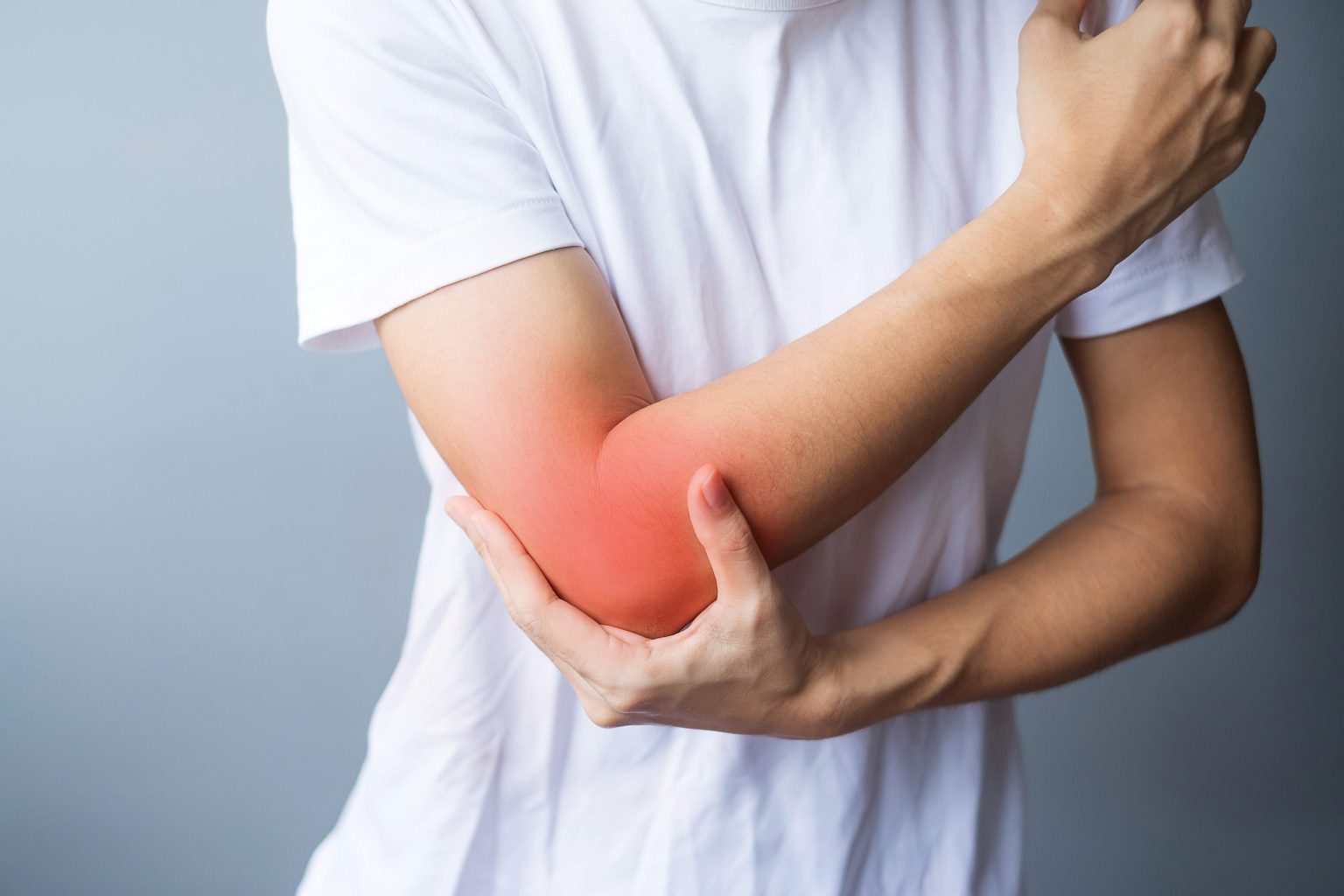
Golfer’s elbow is an overuse injury of the inner elbow that causes pain, tenderness, and weakened grip strength. Known clinically as medial epicondylitis, it affects the tendons that control wrist and finger flexion. These tendons attach to a small bony point on the inside of the elbow. When repeatedly stressed, the tissue breaks down, causing pain, tenderness, and weakness. Think of it as wear and tear concentrated at one small anchoring point.
The name is misleading. Golfer’s elbow affects far more than golfers. Anyone performing repetitive gripping, wrist flexion, or forearm rotation is at risk and in clinical practice, a common patient group is often manual tradespeople rather than sportspeople.
It also helps to distinguish golfer’s elbow from tennis elbow, or lateral epicondylitis. Tennis elbow affects the outer elbow, where the extensor tendons attach. Golfer’s elbow affects the inner elbow, where the flexor pronator tendons originate. Different structures, different sides, and different rehabilitation approaches, though both are overuse tendinopathies.
One anatomical detail matters more than most patient information suggests: the ulnar nerve runs very close to that inner bony point. In some cases, nerve irritation accompanies the tendon pain, producing tingling or numbness in the ring and little fingers. Patients often describe this as a separate problem when they first present, and it changes how the condition is managed.
What Causes Golfer's Elbow?
Golfer’s elbow is caused by repetitive microtrauma to the flexor pronator tendons from sustained gripping, wrist flexion, and forearm rotation. Over time, this microtrauma outpaces the tendon’s ability to repair itself, leading to degenerative change rather than simple inflammation. The pattern of onset and aggravating activities is described further in patient information on golfer’s elbow.
Sport And Exercise Related Causes
- Recreational golf: Poor grip pressure and swing mechanics place excessive load on the inner elbow at impact
- Overhead throwing sports: Stress during the acceleration phase of a throw repeatedly strains the medial elbow structures
- Racquet sports: Topspin forehand strokes and serving mechanics load the flexor pronator origin with each repetition
- Gym training: Heavy barbell curls, pull-ups, and loaded carries with sustained grip demand accumulate stress over training cycles
Occupational And Daily Activity Causes
- Manual trades: Construction workers, plumbers, and carpenters performing repetitive tool use and forceful gripping are a common patient group
- Cooking and hospitality: Sustained chopping, stirring, and heavy lifting in kitchen environments create consistent forearm load
- Office work: Prolonged mouse and keyboard use in poor ergonomic positions can contribute, particularly in combination with other activities
Risk Factors That Increase Susceptibility
- Age-related tendon degeneration: Tendon research indicates that elasticity and repair capacity gradually decline with age, a pattern consistent with medial epicondylitis typically presenting in adults aged 30 to 60
- Training load errors: Sudden increases in volume or intensity without adequate recovery time
- Equipment and technique issues: Grip size, racquet string tension, and throwing mechanics are modifiable factors that can be addressed to reduce recurrence risk
- Prior episodes: A previous episode of golfer’s elbow raises the likelihood of recurrence, particularly where the original cause was never corrected

What Are The Symptoms Of Golfer's Elbow?
The hallmark symptom of golfer’s elbow is pain and tenderness on the inner side of the elbow that worsens with gripping and wrist flexion. Symptoms usually build gradually over weeks rather than starting with a single injury, which is why patients often present late.
Common symptoms include:
- Pain and tenderness over the bony point on the inside of the elbow
- Pain that radiates down the inner forearm toward the wrist
- Weakening grip strength, often noticed first with everyday objects such as a kettle, a bag handle, or a jar lid
- Pain on resisted wrist flexion or forearm rotation, such as turning a doorknob or wringing out a cloth
- Morning stiffness in the elbow and forearm that eases with gentle movement
- Discomfort when shaking hands or carrying groceries
Symptoms that suggest ulnar nerve involvement and warrant earlier assessment:
- Tingling or numbness in the ring and little fingers
- Weakness in the hand rather than the forearm
- Symptoms that worsen when the elbow is held bent for long periods, such as during sleep or phone use
Seek prompt assessment if pain follows a sudden forceful event rather than gradual overload, if the elbow is swollen, hot, or visibly deformed, or if you cannot use the arm for basic daily tasks.
What Are The Types Of Golfer's Elbow?
Golfer’s elbow is not a single uniform condition. The presentation varies by how long symptoms have been present and whether the ulnar nerve is involved, and these distinctions drive the treatment plan more than the diagnosis label alone.
- Acute Reactive Tendinopathy
Symptoms have been present for weeks rather than months. There is a genuine inflammatory component, the tendon has not yet undergone structural change, and load reduction with early rehabilitation often settles the problem. This is the presentation most likely to respond to simple measures. - Chronic Degenerative Tendinopathy
Symptoms have persisted for several months. The tendon shows degenerative change rather than active inflammation, which is why anti-inflammatory measures alone tend to underperform at this stage. Many patients who reach a specialist have already crossed into this category without realising it, having managed the problem with rest and painkillers for months. - Tendinopathy With Ulnar Nerve Involvement
Tendon pain accompanied by tingling, numbness, or weakness in the ring and little fingers. This combination is more common than patients expect and needs to be identified at examination, because managing the tendon alone will not resolve the nerve symptoms.
Conditions That Mimic Golfer's Elbow
Medial elbow pain is not always tendinopathy. Ulnar collateral ligament injury, ulnar neuritis without tendon involvement, and referred pain from the neck can all present similarly. Distinguishing between them is one of the main purposes of a structured examination, and it is the reason self-diagnosis from an internet search is unreliable for persistent medial elbow pain.
How Do You Diagnose Golfer's Elbow?
Golfer’s elbow is primarily a clinical diagnosis based on history and physical examination. Imaging is used selectively, guided by symptom duration and examination findings, rather than ordered routinely for every patient.
Clinical Examination
A first consultation typically involves:
- Direct palpation of the medial epicondyle to localise tenderness
- Resisted wrist flexion and forearm pronation testing to reproduce symptoms
- Grip strength assessment, compared against the unaffected side
- Range of motion testing at the elbow and wrist
- Ulnar nerve assessment, including nerve stress testing, since nerve involvement alongside tendon pain is more common than many patients expect
- Valgus stress testing to check the ulnar collateral ligament, particularly in throwing athletes
Imaging
- Ultrasound is often the first imaging choice, as it assesses tendon integrity dynamically and is readily available
- MRI provides more detailed soft tissue information and is used when the diagnosis is uncertain, when ligament injury is suspected, or when surgical planning is under consideration
- X-rays do not show tendon change but may be used to exclude bony causes such as calcification or arthritis
Imaging is generally considered when symptoms have persisted for several months, when the clinical picture does not fit straightforward tendinopathy, or when escalation to injection or surgery is being weighed. An imaging finding on its own does not determine treatment. It is interpreted alongside symptoms and function.
Differential Diagnosis
Because medial elbow pain has several possible sources, assessment also considers ulnar collateral ligament injury, isolated ulnar neuritis, cervical radiculopathy referring pain to the forearm, and elbow arthritis. This is where a structured examination earns its place.
When To See An Orthopaedic Specialist?
You should see a doctor if inner elbow pain persists beyond two weeks despite rest, ice, and over-the-counter pain relief. Other signs that warrant assessment include weakening grip strength, numbness or tingling in the ring and little fingers, or pain that disrupts daily tasks such as gripping a bag, lifting a kettle, or shaking hands.
If self-care is not working, that is not a failure on your part. It signals that the condition may have moved beyond simple inflammation and warrants a proper assessment by an elbow specialist in Singapore.
The practical threshold most patients find useful: if the pain has changed what you are willing to lift, carry, or grip in daily life, and that has not improved in a fortnight, it is time for a clinical examination rather than another course of rest.
What Are The Treatment Options for Golfer's Elbow?
Treatment for golfer’s elbow follows a staged escalation approach, starting with conservative measures and progressing based on clinical response, symptom duration, and imaging findings. The majority of cases are managed without surgery. The decision to escalate is guided by specific clinical criteria rather than fixed timelines, an approach consistent with published reviews on the evaluation and management of medial epicondylitis.
Treatment Options
- Activity Modification and Bracing: Reducing the provocative load and using a forearm brace to offload the tendon origin is the starting point for all patients
- Structured Physiotherapy: Eccentric and isometric strengthening targeting the flexor pronator muscles forms the foundation of non-operative care
- Injection Therapy: Corticosteroid injections may provide short-term symptomatic relief but carry a risk of tendon weakening with repeated use. PRP, or platelet-rich plasma, injections target tendon healing and are an option for patients who have not responded to corticosteroids, although published evidence remains variable
- Surgical Debridement: Considered for patients who have completed 6 to 12 months of compliant conservative management without meaningful improvement, with imaging-confirmed degenerative tendon changes
| Treatment Tier | Approach | Typical Duration or Indication |
| Conservative | Activity modification, bracing, anti-inflammatory measures | First 6 weeks of symptoms |
| Physiotherapy | Eccentric and isometric strengthening, manual therapy | 6 to 12 weeks, ongoing if improving |
| Injection Therapy | Corticosteroid or PRP injection | Considered if no improvement after 6 to 12 weeks of physiotherapy |
| Surgery | Debridement and tendon reattachment | After 6 to 12 months of failed conservative care with imaging confirmation |
Do You Need Surgery?
Many patients with golfer’s elbow are managed without surgery. Only a small proportion, those that do not respond to a full course of conservative management over 6 to 12 months, proceed to surgical intervention.
Surgery involves debriding chronically damaged tendon tissue and reattaching healthy tendon tissue, known as debridement and repair. It can be performed open or, in appropriate cases, arthroscopically using a small camera and instruments through keyhole incisions.
Candidacy criteria are specific: documented compliance with physiotherapy, failure of at least one injection therapy, imaging-confirmed degenerative tendon changes, and persistent functional limitation affecting daily life or work. The rehabilitation commitment afterwards is substantial and should be weighed before proceeding.
What Treatment Aims To Achieve
Treatment aims to reduce pain, restore grip strength, support a return to sport and daily activities, and limit progression to chronic tendon degeneration. These are clinical aims and intended results, not guaranteed outcomes. Individual responses vary, and earlier presentation generally correlates with a more straightforward recovery pathway.

What Are The Complications Of Untreated Golfer's Elbow?
Complications can arise in two ways: leaving the condition untreated and from the treatments themselves. Both are worth understanding before deciding on a pathway.
- Progression from an acute condition to chronic degenerative tendinopathy, which generally takes longer to treat
- Persistent pain and progressive grip weakness affecting work and daily tasks
- Ongoing ulnar nerve irritation, with tingling, numbness, or hand weakness
- Functional limitation with everyday activities such as carrying groceries, using a computer mouse, or gripping a steering wheel
- Greater likelihood of eventually requiring prolonged rehabilitation or surgery
Can You Prevent Golfer's Elbow?
Prevention centres on managing load and correcting the mechanics that caused the problem in the first place. This matters as much after treatment as before, since recurrence is common where the original cause is never addressed.
Manage Training And Workload
- Increase training volume or intensity gradually rather than in sudden jumps
- Build recovery days into training cycles, particularly with grip-heavy work such as pull-ups, carries, and deadlifts
- Break up sustained gripping tasks at work with short rest intervals rather than working through a full shift uninterrupted
Address Technique And Equipment
- Review golf grip pressure and swing mechanics with a coach, as excessive grip tension at impact is a frequent contributor
- Check racquet grip size and string tension, both of which alter load transmitted to the flexor pronator origin
- Review throwing mechanics in overhead athletes
- Use appropriately sized tools and power tools where possible in manual trades
Prepare And Maintain The Forearm
- Warm up the forearm and wrist before sport rather than starting cold
- Maintain wrist flexor and pronator strength with regular loading, since a conditioned tendon tolerates more than a deconditioned one
- Continue maintenance strengthening after symptoms resolve rather than stopping the moment pain disappears
Optimise Ergonomics
- Position the keyboard and mouse so the wrist stays neutral rather than extended
- Support the forearm at the desk instead of leaving it unsupported
- Alternate between tasks where the work allows, to avoid hours of identical repetitive movement
Act Early On Recurrence
If familiar inner elbow symptoms return, reducing load early tends to give better outcomes than continuing to train or work through the symptoms. The patients with the most difficult presentations are usually those who trained or worked through months of symptoms before seeking assessment.
Conclusion
Golfer’s elbow is a manageable condition when assessed and treated at an appropriate stage. Many patients recover with structured conservative care, and surgery is reserved for a smaller group with confirmed chronic tendon degeneration. Early assessment, accurate diagnosis, a staged treatment approach, and attention to the underlying cause give patients with golfer’s elbow a clear pathway toward a more comfortable grip and a return to full activity.
Seeking early medical evaluation helps ensure an accurate diagnosis and allows treatment options, whether conservative or surgical, to be tailored to your specific functional goals.
WHY CHOOSE DR DENNIS NG
Effective & Evidence-Based Orthopaedic Care
Dr. Dennis Ng is dedicated to understanding your unique needs, focusing on restoring
your active lifestyle and overall well-being.

Specialised Experience In Complex Procedures

PATIENT-CENTRED & PERSONALISED APPROACH

Dedicated Aftercare For Optimal Recovery

AFFORDABLE & TRANSPARENT PRICING

Insurance
Our clinic is on the specialist panels of the following Health Networks/Insurance Plans, and we are happy to assist with your claims or
attend to any query you may have.
Personal Insurance


Corporate Insurance


Contact Us Today
Please send us a message, and our friendly clinic staff will get back to you shortly.
Visit Us Today

Mount Elizabeth Novena Hospital
38 Irrawaddy Road, #08-41
Mount Elizabeth Novena Hospital
Singapore 329563
Monday – Friday: 9am – 1pm; 2pm – 5pm
Saturday: 9am – 1pm
Sunday & PH: CLOSED
Other Clinic Location
Gleneagles Medical Center
6 Napier Road #07-15
Gleneagles Medical Center
Singapore 258499
Monday – Friday: 9am – 1pm; 2pm – 5pm
Saturday: 9am – 1pm
Sunday & PH: CLOSED
Frequently Asked Questions (FAQs)
What is the difference between a golfer's elbow and tennis elbow?
Golfer’s elbow affects the inner elbow, where the flexor pronator tendons attach. Tennis elbow affects the outer elbow, where the extensor tendons originate. The two conditions involve different anatomical structures, are triggered by different movement patterns, and require different rehabilitation approaches, though both are overuse tendinopathies.
Can I still play golf with a golfer's elbow?
Continuing to play through pain is not advisable and typically prolongs recovery. A period of activity modification is usually necessary, particularly during the early treatment phase. As symptoms improve and grip strength returns, a graduated return to golf with attention to grip technique and equipment fit can be planned with your treating doctor and physiotherapist.
How long does golfer's elbow take to heal?
Conservative treatment commonly takes 6 to 12 weeks, and recovery after surgery commonly takes 3 to 6 months. Timelines vary with how long symptoms were present before treatment, the demands of your work or sport, and rehabilitation compliance.
Is PRP effective for golfer's elbow?
PRP injections are an option for patients who have not responded to corticosteroid injections or physiotherapy. The evidence is emerging but remains variable. Some patients experience meaningful improvement, and others do not. It is worth having a candid conversation with your doctor about realistic expectations before proceeding.
Can golfer's elbow come back after treatment?
Yes, recurrence is possible, particularly if the underlying cause, such as technique, training load, or occupational habits, is not addressed. Returning to activity before the tendon has recovered is a common trigger. A structured return-to-activity protocol and ongoing attention to modifiable risk factors can help reduce the likelihood of recurrence.
Do I need an MRI for golfer's elbow?
Not necessarily. Golfer’s elbow is primarily a clinical diagnosis based on history and physical examination. Imaging is typically ordered when symptoms have persisted for several months, when the diagnosis is uncertain, or when surgical planning is being considered. Ultrasound is often the first imaging choice for assessing tendon integrity, and MRI provides more detailed soft tissue information when needed.
Does golfer's elbow cause numbness in the fingers?
It can. The ulnar nerve runs close to the inner elbow, and irritation of this nerve alongside the tendon problem may cause tingling or numbness in the ring and little fingers. This combination should be assessed, because managing the tendon alone will not resolve the nerve symptoms.