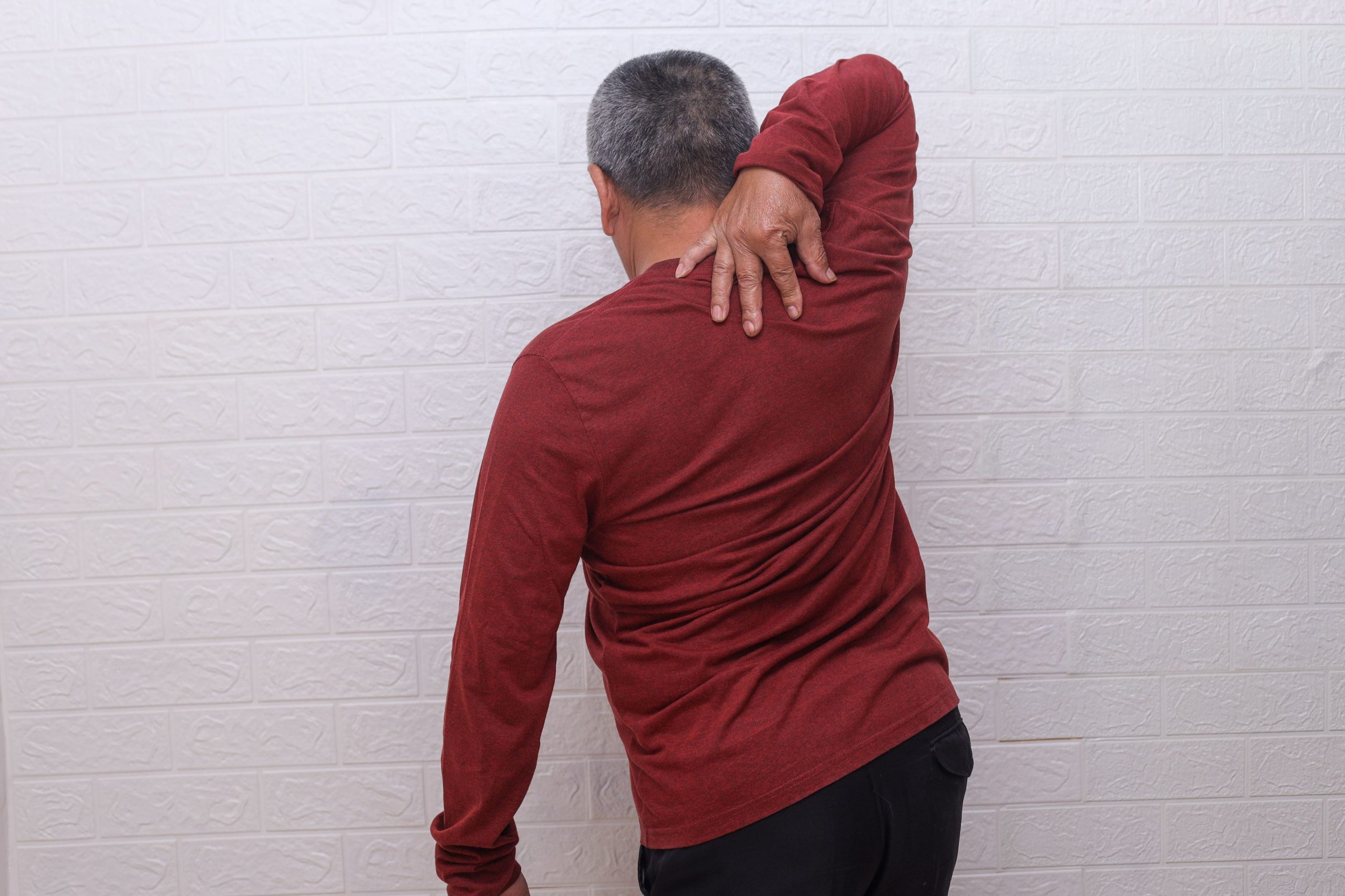
While shoulder pain after waking up often results from simple mechanical compression during sleep, persistent discomfort can signal underlying conditions that require medical attention. The shoulder’s complex anatomy makes it uniquely vulnerable to positional stress, especially when the surrounding soft tissues bear the brunt of joint stability during hours of immobility.
When morning stiffness lasts beyond a short period or is accompanied by weakness, it typically indicates tissue irritation or structural changes rather than normal sleep-related adjustment.
How Sleep Position Affects Shoulder Mechanics
Sleep positions significantly impact shoulder health, as side sleeping can concentrate body weight and compress the rotator cuff, while stomach sleeping causes the shoulders to sag forward under body weight, creating sustained compressive and rotational loading across the shoulder and neck that can irritate the joint and surrounding soft tissues over hours of immobility.
Mattress firmness further complicates these mechanics, as excessively firm surfaces prevent the shoulder from sinking to distribute pressure, while overly soft mattresses allow for suboptimal sagging and misalignment.
Even in the generally safer back-sleeping position, conditions like frozen shoulder (adhesive capsulitis) can cause persistent morning stiffness. This is because the joint capsule has become thickened and scarred through a pathological fibrotic process — not normal tissue behaviour. Overnight immobility aggravates the stiffness that this pre-existing capsular tightening produces, making mornings particularly uncomfortable.
Rotator Cuff Conditions and Morning Symptoms
Rotator cuff conditions often manifest as morning pain because lying down allows inflammatory fluid to accumulate in the bursa and subjects vulnerable tendons to prolonged mechanical compression.
- Fluid Dynamics: When the subacromial bursa is already inflamed, lying directly on the affected shoulder compresses it against underlying structures, intensifying pain. During sleep, the shoulder’s prolonged immobility also allows inflammatory chemicals to build up around irritated tissues — movement during the day helps disperse these and typically eases symptoms as activity resumes.
- Supraspinatus Vulnerability: The supraspinatus tendon passes through a narrow channel — the supraspinatus outlet — bounded above by the acromion, the coracoacromial ligament, and the acromioclavicular joint. When sleeping on the affected side, sustained compression in this already-narrow space places the tendon directly in the impingement zone, making it especially susceptible to irritation.
- Nocturnal Pain Activation: While partial thickness tears may remain silent during the day, the sustained pressure of sleep can activate pain receptors, making underlying damage apparent upon waking.
Frozen Shoulder: The Morning Stiffness Pattern
Frozen shoulder, or adhesive capsulitis, causes a distinctive morning stiffness because the joint capsule thickens and contracts, becoming significantly more rigid during the extended immobility of sleep. While the capsule’s viscoelastic properties allow for a slight increase in range of motion after several minutes of gentle stretching, the underlying restriction persists throughout the day until the condition is addressed, often requiring professional management.
Stages of Frozen Shoulder
- The freezing phase produces the most significant night pain. Active inflammation within the capsule sensitises pain receptors. Any position maintaining shoulder tension generates discomfort. This phase typically lasts several months.
- The frozen phase sees pain reduction but maximum stiffness. Morning symptoms shift from predominantly pain to predominantly restriction. Patients describe the shoulder as “locked” upon waking.
- The thawing phase can last from 6 to 26 months. While many patients experience gradual improvement, complete resolution is not guaranteed — some individuals are left with residual stiffness, and professional management may help improve outcomes.
Osteoarthritis and the Morning Stiffness Connection
Glenohumeral osteoarthritis causes morning discomfort because reduced joint movement during sleep allows synovial fluid to thicken slightly — a well-recognised phenomenon called the “gelling effect.” This produces temporary stiffness upon waking that typically resolves within 30 minutes of gentle activity, as movement redistributes fluid and restores normal joint lubrication.
This under-30-minute duration is a key clinical feature that distinguishes osteoarthritic stiffness from inflammatory joint conditions such as rheumatoid arthritis, where morning stiffness commonly persists for 45 minutes or more. If your morning shoulder stiffness consistently lasts longer than 30 minutes, it is worth discussing with your doctor to rule out inflammatory arthritis.
Cervical Spine Contributions to Morning Shoulder Pain
Shoulder pain upon waking may actually originate in the neck, as compression of the C5 and C6 nerve roots during sleep can refer pain to the shoulder despite the joint itself being healthy.
- Nerve Root Compression: Cervical disc bulges or narrowing of the spinal openings can pinch nerves that supply the shoulder, a process often intensified by poor pillow alignment.
- Radiation Patterns: Unlike localised shoulder issues, cervical-origin pain may radiate from the neck into the arm or hand. While textbooks describe specific dermatomal patterns, clinical evidence shows that most patients with cervical radiculopathy do not follow a predictable dermatome — pain distribution alone should not be used to confirm or exclude a cervical origin.
- Neurological Symptoms: Pain stemming from the spine is frequently accompanied by numbness or tingling and is triggered by neck movements rather than moving the shoulder joint.
- Positional Triggers: While primary shoulder pain reacts to overhead reaching, cervical radiculopathy is more sensitive to the angle of the head and neck during the night.
Bursitis and Night-Time Inflammation
Subacromial bursitis can cause sharp morning discomfort because the inflamed, fluid-filled sac becomes highly sensitive to the direct mechanical pressure applied during side sleeping.
- Mechanical Compression: Side sleeping directly squeezes the inflamed bursa against the acromion bone, which often aggravates the sac and can cause significant nocturnal pain.
- Fluid Accumulation: The inflamed subacromial bursa contains excess fluid as a result of the inflammatory process — not because of a daytime build-up cycle. When you lie on the affected shoulder, this already-swollen, sensitised sac is compressed against the overlying bone, which typically causes the sharp nocturnal and morning pain characteristic of bursitis.
- Rapid Decompression: A hallmark of bursitis is that pain often improves almost immediately upon standing, as the vertical position relieves the direct pressure on the bursa.
- Cumulative Irritation: Repetitive overhead movements during the day can act as a primary catalyst for the inflammation that becomes most apparent when the body is at rest.
Practical Modifications for Better Sleep
- Optimise pillow support: Side sleepers benefit from pillows thick enough to maintain neutral cervical alignment. When viewed from the side, the ear should remain level with the shoulder — neither dropping toward the mattress (pillow too thin) nor tilting upward away from it (pillow too thick). Additional pillows between or beneath the arms can reduce direct shoulder compression.
- Consider sleeping position transitions: Training yourself to alternate sides throughout the night distributes compressive forces. This helps avoid prolonged pressure on one shoulder. Placing a tennis ball in a shirt pocket on the affected side can discourage rolling onto that shoulder.
- Address mattress suitability: Softer to medium-soft mattresses generally accommodate side sleeping better, as they allow the shoulder and hip to sink sufficiently to relieve pressure points while maintaining spinal alignment. Medium-firm surfaces are more appropriate for back sleepers. Mattress toppers can modify existing surfaces without complete replacement — a softer topper on a firm mattress is a practical and cost-effective option.
- Pre-sleep stretching routine: Gentle pendulum exercises (letting your arm swing like a pendulum) and passive range-of-motion movements (moving the arm gently through its range without forcing it) before bed may reduce night-time stiffness. These activities promote synovial fluid distribution and temporarily reduce capsular tension.
- Temperature considerations: Applying localised warmth to the shoulder before sleep — such as a warm shower, warm compress, or heating pad for 15–20 minutes — can help relax surrounding muscles and reduce stiffness. This is distinct from room temperature; maintaining a comfortably cool sleep environment remains appropriate for overall sleep quality. If you have an acute flare with swelling or warmth in the joint, ice is more suitable than heat.
When to Seek Professional Help
- Pain persisting beyond a couple of weeks despite position modifications
- Weakness when lifting the arm away from the body
- Inability to sleep due to shoulder pain regardless of position
- Morning stiffness lasting longer than 30 minutes daily — as this duration suggests an inflammatory joint condition requiring assessment.
- Pain accompanied by numbness or tingling extending into the hand
- History of shoulder injury preceding symptom onset
- Shoulder swelling, redness, or warmth
- Night pain occurring even when lying on the unaffected side
Commonly Asked Questions
Why does my shoulder hurt only when I sleep on it?
Direct compression when lying on the affected shoulder concentrates mechanical force on sensitised tissues in the subacromial space and bursa. During sleep, nerve pathways that normally help suppress pain during movement are less active — this “opens the pain gate,” making the shoulder more sensitive to discomfort. Pro-inflammatory proteins also accumulate in the joint during rest. Together, these mechanisms explain why compression during sleep activates pain more readily than the same pressure might during the day. This pattern suggests positional mechanical irritation, though underlying structural damage should always be assessed by a professional if pain persists.
Can a bad pillow cause shoulder pain after waking up?
Inappropriate pillow height forces compensatory shoulder positioning throughout the night. Pillows that are too thin allow the head to drop toward the mattress. This can roll the shoulder forward and compress the subacromial space. Pillows that are too thick push the head upward. This may create lateral neck flexion that can strain the upper trapezius and levator scapulae (upper back and neck muscles) attachments near the shoulder.
How do I know if my morning shoulder pain is serious?
Pain that persists throughout the day, accompanies weakness with specific movements, or follows a traumatic event warrants professional evaluation. Similarly, symptoms that progressively worsen over weeks despite conservative measures, or those accompanied by neurological changes (such as numbness, tingling, or altered sensation) in the arm or hand, suggest conditions requiring accurate diagnosis and targeted treatment.
Will morning shoulder pain resolve on its own?
Positional discomfort often improves with sleep hygiene modifications within several weeks. However, underlying conditions such as rotator cuff tears, frozen shoulder, or arthritis follow their own trajectories regardless of positioning changes. Your healthcare provider can help determine whether watchful waiting remains appropriate. They can also assess whether intervention may support recovery through accurate diagnosis.
Should I use heat or ice for morning shoulder stiffness?
Warm compresses or showers generally help morning stiffness. They promote blood flow and reduce muscle tension accumulated overnight. Ice often serves better for acute inflammatory episodes or post-activity discomfort. Individuals with inflammatory arthritis frequently find warmth particularly beneficial for morning symptoms.
Next Steps
Shoulder pain persisting beyond two weeks despite sleep position changes, weakness when lifting the arm, or stiffness that limits daily activities warrants professional assessment. Imaging studies and clinical examination can identify rotator cuff pathology, capsular restrictions, or cervical contributions—each of which generally requires a specific treatment approach rather than conservative measures alone. If numbness or tingling extends into the arm or hand, cervical involvement should be ruled out before treatment begins.
If you are experiencing persistent shoulder pain after waking up, weakness when raising your arm, or morning stiffness that does not resolve within minutes, an orthopaedic specialist can evaluate the underlying cause and recommend an appropriate treatment plan.