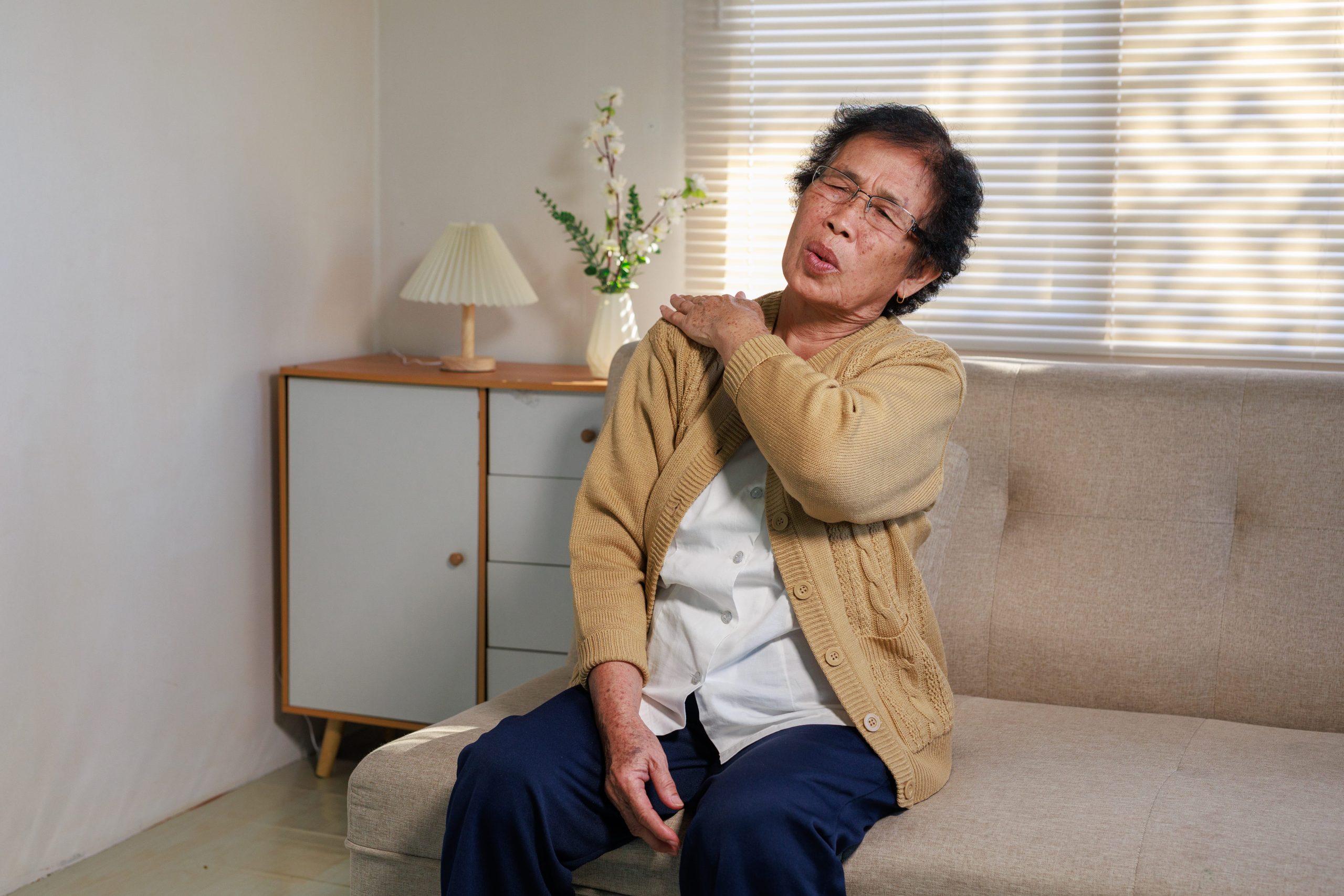
That sharp catch when you reach for something overhead, whether it is lifting a bag into an overhead compartment, throwing a ball, or simply brushing your hair, is one of the most common shoulder complaints. If you are experiencing shoulder pain when raising your arm and wondering what is actually going on inside the joint, this guide is for you.
What Happens Inside Your Shoulder When You Raise Your Arm
When you lift your arm, a coordinated sequence of movements occurs across several structures: the bones of the shoulder joint shift position, a group of muscles and tendons stabilise the ball within the socket, and a small fluid-filled sac cushions the moving parts from friction. When any of these structures are compressed, inflamed, or damaged, that smooth sequence breaks down and pain follows.
The Subacromial Space and Why It Matters
The subacromial space is the narrow gap between the top of your upper arm bone (the humerus) and the bony arch above it (the acromion). Think of it as a tunnel that several important structures must pass through every time you raise your arm. The rotator cuff tendons (the tendons attached to the group of muscles that stabilise the shoulder) and the subacromial bursa (a small fluid-filled cushion that reduces friction) all run through this space.
This tunnel is not very generous. When the structures inside it become thickened, inflamed, or when the tunnel itself narrows due to bone shape or posture, there is less room for everything to move freely.
How Tendons, Bursa, and Bone Interact During Overhead Movement
As your arm rises, the subacromial space naturally narrows slightly. Under normal circumstances, the rotator cuff muscles hold the ball of the shoulder down and away from the arch, preserving enough clearance for the tendons and bursa to glide through without catching. When the rotator cuff is weakened, the tendons are thickened, or the bursa is inflamed, this clearance may diminish. The result can be a repetitive pinching of soft tissue against bone. Over time, that repeated compression may contribute to pain, inflammation, and, in some cases, structural changes.
Common Conditions That Cause Shoulder Pain When Raising Your Arm
Several different conditions share the symptom of pain on arm elevation, and they can feel remarkably similar to the person experiencing them. The table below highlights how they may differ in presentation.
| Condition | Typical Pain Pattern | Age Group Commonly Affected | Gradual or Sudden Onset |
| Shoulder impingement syndrome | Aching pain at the outer shoulder, often worse between about 60 to 120 degrees of arm elevation | Commonly adults aged 30 to 60, overhead athletes | Gradual |
| Rotator cuff tear (partial) | Deep aching, pain with lifting and at night | Commonly adults aged 40 and above | Gradual, or sudden after strain |
| Rotator cuff tear (full-thickness) | Weakness, difficulty lifting the arm fully | Commonly older adults | Often sudden after injury |
| Frozen shoulder | Diffuse aching progressing to marked stiffness in all directions | Commonly adults aged 40 to 60, more often in women | Gradual (months) |
| Calcific tendinitis | Intense, acute pain in some phases | Commonly adults in their 30s to 50s | Can be sudden or gradual |
| Subacromial bursitis | Aching, swollen feeling at the shoulder tip | Broad range; often alongside impingement | Gradual |
Shoulder Impingement Syndrome
Shoulder impingement occurs when the rotator cuff tendons or the bursa are repeatedly pinched in the subacromial space during arm elevation. The hallmark is a painful arc: discomfort that begins as you raise your arm to roughly shoulder height, intensifies through the mid-range, and may ease again as the arm goes fully overhead. Activities like reaching across a table, swimming, or throwing are common triggers. Many cases may improve with conservative treatment, though individual results vary.
Rotator Cuff Tears: Partial and Full-Thickness
The rotator cuff is made up of four muscles and their tendons, and it can develop tears ranging from small partial splits to complete full-thickness ruptures. A partial tear causes pain similar to impingement but often with a deeper, more persistent ache. A full-thickness tear may produce noticeable weakness: you may find it difficult to lift your arm against resistance, or the arm may feel unstable during overhead tasks. Tears can develop gradually through wear and tear, or occur following a fall or heavy lifting incident. You can read more about rotator cuff injuries and how they are assessed.
Frozen Shoulder and Its Distinct Pattern
Frozen shoulder (also called adhesive capsulitis) differs from the other conditions in one important way: it restricts movement in all directions, not just during overhead lifting. The shoulder capsule (the tissue surrounding the joint) becomes inflamed and then thickened and contracted, progressively limiting rotation as well as elevation. Many patients describe a dull, constant ache that worsens at night, followed by a period of increasing stiffness that can persist for months, and in some cases longer.
Other Causes: Calcific Tendinitis and Bursitis
Calcific tendinitis occurs when calcium deposits form within the rotator cuff tendons. During certain phases, it can cause sudden, severe pain. Subacromial bursitis refers to inflammation of the bursa itself, often occurring alongside impingement. Treatment options are available for both conditions, and imaging may be used to help confirm the diagnosis.
How Do You Know If It Is Impingement or a Rotator Cuff Tear?
Clinical examination and imaging are needed to confirm the diagnosis, but the pattern of symptoms can offer useful clues.
Pain Patterns That Point to Impingement
Impingement typically produces a painful arc: the shoulder aches as the arm rises through the mid-range (roughly between shoulder and ear height) but may feel easier at the very top of the movement. The pain is usually located at the outer side or front of the shoulder. Night pain is common, particularly when lying on the affected side. Strength, while potentially reduced by pain, is generally preserved when the arm is tested in a pain-free position.
Signs That Suggest a Tendon Tear
With a rotator cuff tear, weakness tends to be more prominent and may not simply be a consequence of pain avoidance. Difficulty initiating the lift of the arm, a sense that the shoulder feels unstable under load, or difficulty holding the arm up against light resistance may be present. Night pain is often more intense with tears than with impingement alone. A sudden loss of strength following a specific incident such as a fall or heavy lift may be worth discussing with a healthcare professional.
Why Shoulder Pain May Worsen Over Time Without Assessment
When impingement is the starting point, repeated compression of the tendons and bursa against the bony arch may contribute to ongoing inflammation. Researchers continue to discuss how tendon degeneration and compression from outside the tendon each contribute to rotator cuff problems, and the two factors are thought to influence each other. Tendons that are chronically irritated may begin to degenerate, and in some people small tears can develop. A partial tear may extend over months or years, particularly if the underlying cause is not addressed.
Earlier assessment may allow a broader range of conservative, non-surgical options, whereas waiting until the shoulder is severely painful or significantly weak may narrow the choices available.
The Progression from Impingement to Rotator Cuff Damage
Impingement compresses the rotator cuff tendons repeatedly against the bony arch above. In some people, this may be associated with tendon degeneration and, over time, partial or full-thickness tears. Individual outcomes vary, and a clinical assessment can help clarify what is happening in your shoulder.
What to Expect During a Shoulder Assessment
Physical Examination: What the Specialist Is Looking For
Your appointment will begin with a detailed history: when the pain started, what movements aggravate it, whether there was an injury, and how it affects your daily activities and sleep. The specialist will then examine the shoulder through a series of specific tests. These manoeuvres are designed to reproduce the pain or identify weakness in a controlled way, helping to identify which structures are involved. Common tests assess the subacromial space (by moving the arm into positions that compress it), rotator cuff strength (by testing resistance in specific directions), and shoulder stability. None of these tests is invasive, though some may temporarily reproduce your familiar discomfort.
When Imaging Is Needed and What Each Scan Reveals
An X-ray can reveal the shape of the acromion, the presence of calcium deposits, or signs of arthritis. An ultrasound provides a dynamic view of the rotator cuff tendons and bursa, and is particularly useful for identifying tears and fluid around the joint. An MRI gives a detailed picture of the soft tissue structures, including the joint capsule, labrum, and the extent of any tendon damage. Your specialist will discuss which imaging option may be appropriate based on your examination findings.
Non-Surgical Options for Shoulder Pain
Many shoulder pain conditions, including impingement, mild to moderate rotator cuff tears, and bursitis, may be managed without surgery in suitable candidates. Conservative treatment aims to reduce inflammation, restore normal movement mechanics, and strengthen the structures that support the joint.
Physiotherapy and Targeted Strengthening
Physiotherapy is central to conservative shoulder management. A structured programme focuses on two main goals: reducing pain and restoring the rotator cuff’s ability to hold the humeral head (the ball of the shoulder joint) in the correct position during movement. This typically involves strengthening the rotator cuff and the muscles around the shoulder blade (the scapular stabilisers), improving posture, and addressing movement patterns that may be contributing to impingement.
Injections: Corticosteroids and Platelet-Rich Plasma Therapy
When pain is limiting participation in physiotherapy, or when inflammation is not settling with exercise alone, injections may be considered.
A corticosteroid injection delivers an anti-inflammatory agent directly into the subacromial space or the joint. It may provide pain relief within days, creating a window during which physiotherapy becomes more manageable. The effects are typically temporary, and repeated injections are generally limited to reduce the potential for tendon changes over time.
Platelet-rich plasma (PRP) therapy involves injecting a concentration of the patient’s own platelets (the components of blood involved in healing and tissue repair) into the affected area. PRP may be considered in selected cases where degenerative tendon changes are present, and the clinical aim is to support tissue repair. It tends to work more gradually than corticosteroids, and evidence comparing PRP with corticosteroid injections is still mixed. A doctor will determine which option may be more suitable based on your specific diagnosis and the stage of your condition, and individual responses vary. For more information, you may speak with a shoulder specialist in Singapore.
When Surgery May Be Recommended
Surgery is not the first step, and for many patients it may not be required. However, there are situations where conservative management has not produced adequate improvement, or where the nature of the injury makes surgical intervention a more practical path.
Common considerations include: a full-thickness rotator cuff tear causing significant weakness, impingement that has not responded to physiotherapy and injections over several months, or a large calcium deposit causing persistent severe pain. For athletes who rely on full overhead function, a surgical discussion may be reached sooner, particularly when a structural problem has been confirmed on imaging.
When surgery is indicated, arthroscopic (keyhole) techniques allow the surgeon to address the problem through small incisions using a camera and fine instruments. Some patients may experience less discomfort in the early postoperative period, although studies comparing arthroscopic and mini-open rotator cuff repair report similar function and pain outcomes over the longer term. The specific procedure depends on what is found: this may involve decompressing the subacromial space, rotator cuff repair of a torn tendon, or removing calcium deposits.
Clinical Insights
A pattern that may be seen in clinical practice is the patient who has quietly adapted their movement for months before seeking help. They have stopped reaching overhead, switched to sleeping on the other side, and dropped activities they used to enjoy, often without fully registering how significantly the shoulder has changed their daily life. By the time they attend a consultation, the shoulder may already show some degree of structural change.
Clinical experience treating athletes and active individuals with shoulder conditions highlights that earlier assessment may be associated with a broader range of treatment choices. Athletes in particular, accustomed to managing through discomfort, sometimes present with tears that were not recognised when symptoms first appeared. The shoulder does not always give clear warning before a partial problem becomes a more significant one.
Getting Back to Full Movement After Shoulder Treatment
Recovery from shoulder treatment is not a passive process. Whether you have undergone physiotherapy, injections, or surgery, structured rehabilitation is an important part of regaining function.
For conservative management, recovery time varies depending on the severity of the underlying condition. For those who have had arthroscopic surgery, the timeline varies by procedure: subacromial decompression may allow a return to light activities within a few weeks, while rotator cuff repair typically requires a more extended period of protected movement followed by progressive strengthening, with return to sport or heavy overhead activity commonly taking several months. Individual results vary, and your surgeon will advise on a timeline suited to you.
When to Seek Professional Help
- Pain that has persisted for one to two weeks without clear improvement
- Difficulty sleeping on the affected side due to shoulder pain
- Noticeable weakness when lifting your arm or carrying objects
- Pain that followed a specific fall, impact, or sudden strain
- A gradual but progressive loss of shoulder movement in multiple directions
- Pain that is consistently disrupting your work, sport, or daily activities
Earlier assessment may support an accurate diagnosis and may widen the range of treatment options to consider.
Commonly Asked Questions
How long does shoulder impingement take to heal?
Recovery time varies depending on the severity of the condition and how consistently treatment is followed. Non-surgical treatment may take several weeks to months, and more established cases, or those involving tendon degeneration, may take longer. Individual results vary.
Can I still exercise with shoulder pain when raising my arm?
In many cases, exercise can continue with some modifications. Activities that do not involve overhead movement or load through the painful range are often tolerable. You may wish to avoid pushing through sharp or worsening pain, as this can aggravate the underlying condition. A physiotherapist or specialist can advise on which activities are appropriate to continue while your shoulder is being assessed and treated.
Is shoulder impingement the same as a rotator cuff tear?
No, though the two conditions can be related. Shoulder impingement refers to the compression of tendons and bursa in the subacromial space. A rotator cuff tear is structural damage to one or more of the tendons themselves. Both can occur in the same shoulder, which is one of the reasons a clinical assessment is worth discussing with a healthcare professional.
Do I need an MRI for shoulder pain?
Not always. An MRI is typically recommended when a more detailed assessment of the soft tissues is needed, such as when a rotator cuff tear is suspected, when symptoms are not responding to initial treatment, or when surgical planning is being considered.
What happens if shoulder impingement is left unaddressed?
Outcomes vary. In some people, ongoing irritation may be associated with gradual tendon changes and, in some cases, tears. Larger tears can be more complex to treat and may require surgery. A specialist can assess your shoulder and discuss the options that may suit you.
Next Steps
If your shoulder has been catching or aching when you raise your arm, it may be helpful to note which movements trigger the pain, whether it is worsening, and whether it is affecting your sleep or daily activities. In the interim, reducing repetitive overhead movements that consistently reproduce the pain may be worth considering. If symptoms have persisted for one to two weeks, or if you have noticed weakness or a significant change in movement, speaking with a specialist may be a reasonable next step.
Speak with a Shoulder Specialist
Clinical experience treating athletes and active individuals with shoulder conditions highlights that earlier assessment may be associated with a broader range of treatment choices. Patients present with shoulder conditions ranging from impingement and rotator cuff injuries to frozen shoulder and instability. A doctor will determine the diagnostic steps and treatment approaches most suitable for your situation.