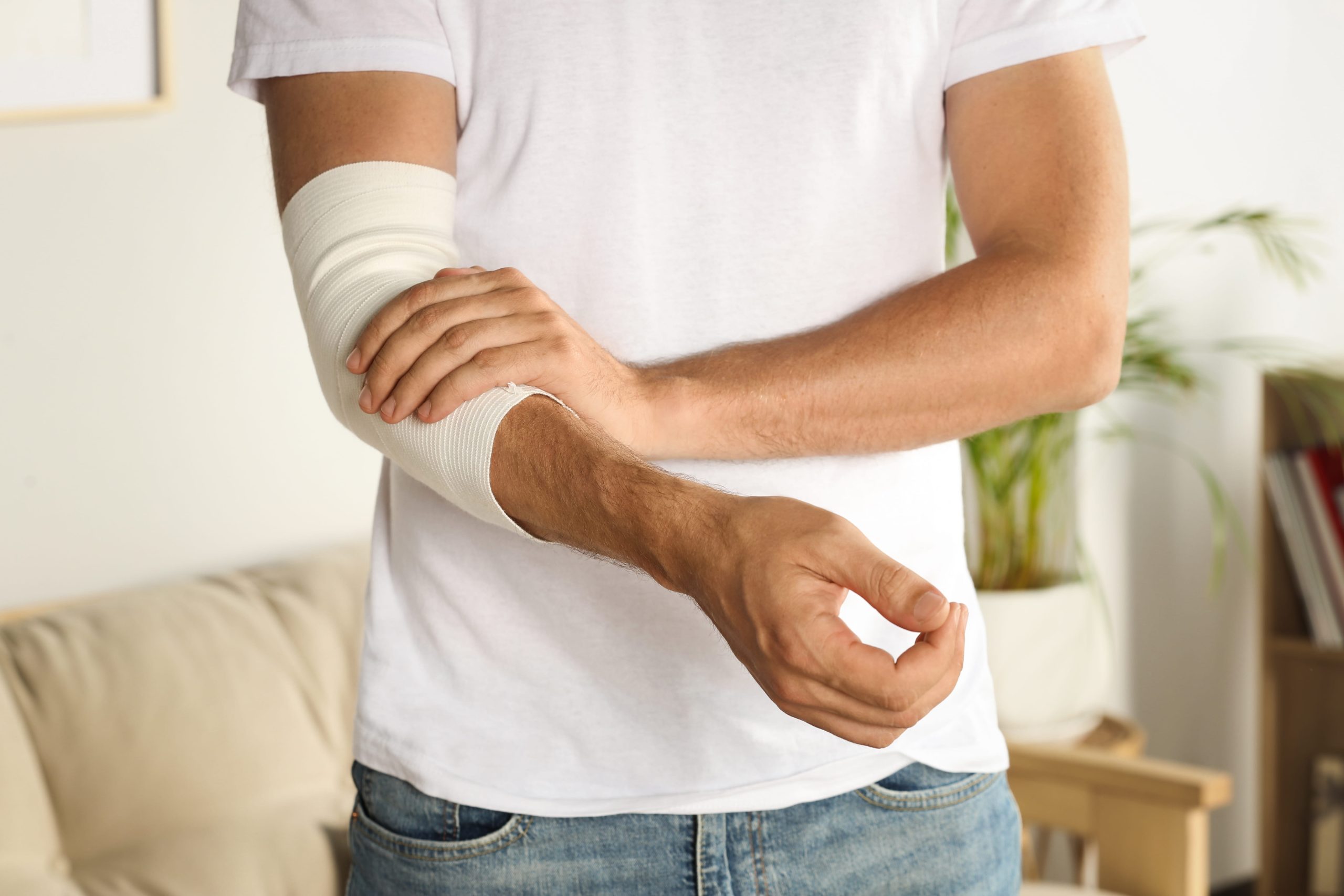
Elbow pain can make ordinary movements like reaching for something on a shelf, throwing a ball, or fully extending your arm feel frustrating and limiting. This guide explains common causes, how they are assessed, and when it may be worth speaking with a specialist.
Why Your Elbow Hurts When You Straighten or Bend It
Elbow pain during extension (straightening) or flexion (bending) refers to discomfort, stiffness, or a sharp sensation that arises when you move the elbow through its range of motion. It may occur at the outer side, inner side, or back of the elbow, and it often points to a specific structure within the joint being stressed or damaged.
How the Elbow Joint Works
The elbow is where three bones meet: the humerus (upper arm bone), the radius, and the ulna (the two forearm bones). These bones are held together by ligaments, cushioned by a fluid-filled sac called the bursa, and controlled by tendons that connect the surrounding muscles to the bone.
Because the elbow handles both bending and rotating movements, it relies on a precise balance between all of these structures. When any one of them becomes inflamed, torn, or compressed, movement can become painful.
Why Movement-Specific Pain Is a Useful Diagnostic Clue
The location and timing of your pain are genuinely helpful pieces of information. Pain at the outer elbow when straightening the arm often involves the tendons or structures on the lateral (outer) side. Pain at the back of the elbow on extension typically points to the olecranon, the bony tip at the back of the joint. Inner elbow pain when bending tends to involve the medial (inner) side structures, including nerves and ligaments.
Common Causes of Elbow Pain When Straightening Your Arm
Tennis Elbow (Lateral Epicondylitis)
Tennis elbow involves degeneration and micro-tearing of the tendons that attach to the lateral epicondyle, the bony prominence on the outer side of the elbow.
Despite the name, you do not need to play tennis to develop it. It commonly affects people who perform repetitive gripping, lifting, or twisting movements, including desk workers, tradespeople, and recreational athletes. The hallmark symptom is a burning or aching pain on the outer elbow that may worsen when you grip objects, lift with a straightened arm, or fully extend the elbow.
Elbow Bursitis (Olecranon Bursitis)
The olecranon bursa is a small, fluid-filled sac that sits over the bony tip at the back of the elbow. When it becomes inflamed, often due to a direct blow, prolonged pressure (such as leaning on hard surfaces), or infection, it can swell noticeably and cause pain, particularly at the end range of elbow extension.
Olecranon bursitis is recognisable by visible swelling at the back of the elbow, tenderness to touch, and discomfort when fully straightening the arm. Redness, marked warmth, increasing pain, or a fever alongside the swelling may suggest an infection and should prompt prompt medical review.
Triceps Tendinitis
The triceps muscle runs along the back of the upper arm and attaches to the olecranon via the triceps tendon. Repetitive pushing or throwing movements can cause this tendon to become inflamed or partially torn, resulting in pain behind the elbow when extending the arm against resistance.
Triceps tendinitis is more common in weightlifters, overhead athletes, and those who perform frequent pushing movements.
Elbow Arthritis or Loose Bodies
Arthritis in the elbow causes the cartilage lining the joint to break down over time. As cartilage wears away, the bones may begin to rub against each other, causing pain, stiffness, and a reduced range of motion. In some cases, fragments of bone or cartilage (called loose bodies) can break off and become lodged within the joint, causing a catching or locking sensation during movement, including extension.
Fracture or Post-Injury Stiffness
A fall onto an outstretched hand or a direct impact to the elbow can cause a fracture, even if the arm appears relatively normal immediately afterwards. Pain when straightening the arm following a trauma may warrant prompt assessment. Even after a fracture has healed, scar tissue and joint stiffness can persist and limit full extension.
The table below is intended to help you understand how these conditions may differ. It is not a way to diagnose yourself.
| Condition | Typical Pain Location | Common Triggers | Who Is Most at Risk |
| Tennis elbow | Outer elbow | Gripping, lifting, extending arm | Desk workers, racquet sport players, tradespeople |
| Olecranon bursitis | Back of elbow (tip) | Direct pressure, impact | Anyone; more common with repetitive leaning |
| Triceps tendinitis | Back of elbow | Pushing, overhead activity | Weightlifters, throwing athletes |
| Elbow arthritis / loose bodies | Diffuse or deep within joint | General movement, especially end range | Middle-aged to older adults, those with prior injury |
| Fracture / post-injury stiffness | Variable; often diffuse | Movement after a fall or impact | Anyone following trauma |
Common Causes of Inner Elbow Pain When Bending Your Arm
When pain sits on the inner side of the elbow, the underlying cause is typically different from lateral or posterior conditions. Inner elbow pain when extending or bending the arm usually involves the medial structures, including tendons, ligaments, and nerves.
Golfer’s Elbow (Medial Epicondylitis)
Golfer’s elbow involves degeneration of the tendons that attach to the medial epicondyle, the bony prominence on the inner side of the elbow. Like tennis elbow, it does not require you to play golf. It commonly develops from repetitive wrist flexion, gripping, or forearm rotation, and is seen in golfers, climbers, manual labourers, and throwing athletes.
The typical symptom is aching or tenderness on the inner elbow, which may radiate down the forearm. Pain may worsen when you grip, flex the wrist, or bend the elbow under load.
Ulnar Nerve Irritation (Cubital Tunnel Syndrome)
The ulnar nerve travels through a narrow channel on the inner side of the elbow called the cubital tunnel. When this nerve becomes compressed or irritated, often from prolonged elbow bending, leaning on the elbow, or repetitive flexion, it can cause pain, numbness, and tingling along the inner forearm and into the ring and little fingers.
Cubital tunnel syndrome is sometimes mistaken for golfer’s elbow because both cause inner elbow discomfort. Nerve-related symptoms, such as tingling or numbness in the fingers, are more characteristic of cubital tunnel syndrome, though they can occur with other inner elbow conditions.
Medial Ligament Strain
The medial collateral ligament (MCL) of the elbow stabilises the inner side of the joint, particularly during throwing or overhead activities. Repetitive stress or a sudden valgus force (a force that pushes the forearm outward) can strain or partially tear this ligament, causing inner elbow pain that may worsen with throwing, serving, or any activity that loads the medial side. You can read more about elbow ligament injuries.
How Tennis Elbow and Golfer’s Elbow Differ at a Glance
| Feature | Tennis Elbow | Golfer’s Elbow |
| Pain location | Outer (lateral) elbow | Inner (medial) elbow |
| Aggravating movements | Gripping, extending arm, lifting | Wrist flexion, gripping, bending elbow under load |
| Common activities | Racquet sports, typing, manual work | Golf, climbing, throwing, manual labour |
| Nerve symptoms | Less common | Can occur (particularly if the ulnar nerve is involved) |
Inability to Fully Straighten Your Elbow After Injury
If you cannot fully straighten your elbow after a fall, collision, or impact, an orthopaedic assessment may be worth seeking. The inability to fully straighten the elbow after injury can result from several causes, including:
- Swelling within the joint that physically blocks full extension
- Scar tissue forming around the joint capsule
- An undetected fracture
- A dislocation that has not been fully addressed
In some cases, the joint capsule itself becomes tight and contracted, a condition known as elbow contracture. This can develop after injury, particularly when the elbow has been immobilised for a prolonged period or when rehabilitation is delayed.
Early treatment may help reduce swelling and support range of motion. If your elbow has not returned to full extension within a few days of an injury, or if it was never fully straight after the incident, speaking with a healthcare professional may be helpful. For specialised care, consulting an elbow specialist may be worthwhile.
How the Cause of Your Elbow Pain Is Diagnosed
At an orthopaedic consultation, the diagnostic process begins with a focused conversation about your symptoms: where the pain is, when it started, what makes it worse, and whether there was a triggering injury. The doctor will then examine your elbow directly, assessing range of motion, pinpointing tenderness, and applying specific movement tests designed to stress individual structures. For example, resisted wrist extension helps identify tennis elbow, while a nerve tap test over the cubital tunnel can reproduce ulnar nerve symptoms.
Imaging is often used to confirm the clinical picture. X-rays are useful for identifying fractures, arthritis, loose bodies, and bony changes. An MRI (magnetic resonance imaging) provides detailed views of soft tissues including tendons, ligaments, and cartilage, and is particularly helpful when a tendon tear or ligament injury is suspected. Ultrasound can also be used to assess tendons dynamically in real time.
In cases where nerve involvement is suspected, nerve conduction studies may be recommended. These tests measure how well electrical signals travel along the nerve, helping to confirm cubital tunnel syndrome and guide treatment decisions.
Treatment Options for Elbow Pain When Bending or Straightening
Non-Surgical Approaches
For many elbow conditions, non-surgical management is the appropriate starting point. Most new elbow pain improves within about six to eight weeks, though some conditions take longer. Options include:
- Rest and activity modification: Reducing or temporarily avoiding the movements that aggravate the elbow allows inflamed tissues to settle.
- Physiotherapy: A structured rehabilitation programme addresses muscle imbalances, improves flexibility, and progressively strengthens the tendons and muscles around the elbow. This is central to recovery for conditions like tennis elbow and golfer’s elbow.
- Bracing and support: A counterforce brace (worn below the elbow) can reduce the load on the lateral epicondyle during activity and may help some people with tennis elbow.
- Corticosteroid injections: An injection of anti-inflammatory medication may be considered in selected cases. For tennis elbow, corticosteroid injections tend to give short-term relief, while PRP shows slower, longer-term improvement, and symptoms may return after the initial relief. For non-infected bursitis, corticosteroid injection has been linked to more complications without better outcomes, and it is not used if infection is suspected. A doctor will advise whether an injection is suitable for you.
- Platelet-rich plasma (PRP) therapy: PRP involves injecting a concentration of the patient’s own platelets into the damaged tendon and aims to support tissue healing. It may be considered for chronic tendinopathy that has not responded to other conservative measures. Study quality varies, and individual responses differ.
- Nerve management: For cubital tunnel syndrome, activity modification, elbow padding, and nerve gliding exercises may help. Avoiding prolonged elbow flexion, particularly during sleep, may also be worth considering.
When Surgery May Be Considered
Surgery is typically considered when symptoms have persisted despite a consistent course of non-surgical treatment over several months, when there is a significant structural problem (such as a complete tendon tear, a loose body causing locking, or severe nerve compression), or when the condition is significantly limiting daily activities or return to sport.
Minimally Invasive Elbow Surgery
Where surgery is appropriate, minimally invasive techniques, including arthroscopic (keyhole) surgery, are used where possible. Arthroscopy allows the surgeon to visualise and treat the inside of the joint through small incisions using a camera and fine instruments. Procedures that can be performed this way include:
- Loose body removal
- Joint debridement (clearing damaged tissue)
- Tendon release (in some cases), such as tennis elbow release
| Approach | Typical Candidates | Expected Recovery | Goal of Treatment |
| Physiotherapy and activity modification | Mild to moderate tendinitis, early arthritis, nerve irritation | Weeks to a few months | Reduce pain, restore strength and function |
| Bracing | Tennis elbow, golfer’s elbow during activity | Ongoing during activity | Reduce load on affected tendon |
| Corticosteroid injection | Selected cases of bursitis, persistent tendinitis, joint inflammation | Days to weeks for symptom relief | Short-term pain relief to enable rehab |
| PRP therapy | Chronic tendinopathy not responding to other measures | Several weeks to months | Aims to support tendon healing |
| Minimally invasive surgery | Failed conservative treatment, structural damage, loose bodies, nerve compression | Weeks to a few months depending on procedure | Restore joint function and enable return to activity |
Clinical Insights
From a clinical perspective in elbow care, conditions like tennis elbow, golfer’s elbow, and cubital tunnel syndrome can present similarly on the surface, but may require distinctly different management approaches. Applying an intervention that does not match the underlying cause, such as treating a tendon when the primary issue is nerve compression, may delay overall recovery.
In athletes and active individuals, accurate diagnosis is particularly relevant. Returning to sport or routine activity requires not just temporary discomfort relief, but the gradual restoration of strength, control, and endurance in the affected structures, with individual recovery timelines varying.
Steps You Can Take to Protect Your Elbow and Support Recovery
- Adjust your ergonomics: If you work at a desk, ensuring your chair height and keyboard position allow your elbows to rest at roughly 90 degrees may be worth considering. Prolonged leaning on the elbow is generally best avoided.
- Warm up before activity: Gentle dynamic stretching of the forearm and wrist before sport or manual work may help reduce tendon stress.
- Strengthen the supporting muscles: Forearm and wrist strengthening exercises, guided by a physiotherapist, can support resilience in the tendons around the elbow.
- Modify your technique: In racquet sports, throwing activities, or weightlifting, technique can contribute to elbow overload. A coach or physiotherapist can help identify and address these patterns.
- Be mindful of pain during activity: Pushing through sharp or worsening elbow pain during activity may delay recovery. Dull muscle fatigue is generally different from joint or tendon pain; a healthcare professional can help you understand the distinction.
- Use supportive equipment: Appropriate grip size, racquet string tension, and wrist support during heavy lifting may help reduce repetitive stress on the elbow.
When to Seek Professional Help
- Inability to fully straighten or bend the elbow
- Pain that has persisted for a few weeks without improvement
- Swelling around the elbow that does not reduce with rest
- Redness, warmth, or fever together with elbow pain or swelling, which should be reviewed promptly
- Numbness, tingling, or weakness in the forearm or fingers
- A popping, locking, or catching sensation during movement
- A visible deformity, or elbow pain that developed following a fall, direct impact, or sudden force
- Pain that is severe enough to disrupt sleep or daily activities
Commonly Asked Questions
How do I know if my elbow pain is serious or will go away on its own?
Mild elbow soreness that follows an unusually active day often settles with a few days of rest. Pain that persists for a few weeks, worsens with continued activity, or is accompanied by swelling, numbness, or a loss of movement range may be less likely to resolve on its own. Earlier assessment may allow a wider range of treatment options to be considered.
Can I still exercise or play sports with elbow pain?
This depends on the cause and severity. Low-impact activities that do not load the elbow may be appropriate to continue. However, continuing activities that directly stress the affected structure, such as gripping, throwing, or pressing, through pain may worsen tendon damage or delay nerve recovery. A physiotherapist or orthopaedic specialist can help determine which activities are appropriate to continue during recovery.
How long does it take for elbow pain to improve with treatment?
Recovery timelines vary considerably depending on the condition. Mild tendinitis may improve within several weeks of rest and physiotherapy. Chronic conditions like tennis elbow or golfer’s elbow can take several months of consistent rehabilitation, and some cases take longer. Post-surgical recovery for minimally invasive procedures typically ranges from a few weeks to a few months, depending on what was addressed. Individual results vary.
Is elbow pain when straightening my arm a sign of arthritis?
Not necessarily. Elbow pain when straightening the arm has several possible causes, including tendinitis, bursitis, and loose bodies, many of which are not arthritis-related. Arthritis is more likely when pain is accompanied by persistent stiffness, a grinding sensation, and a gradual reduction in movement over time. An X-ray can help determine whether arthritic changes are present.
Do I need an MRI for elbow pain, or is an X-ray enough?
An X-ray is useful for identifying fractures, arthritis, and bony changes. An MRI provides more detailed information about soft tissues, including tendons, ligaments, and cartilage, and is typically recommended when a tendon tear, ligament injury, or nerve-related condition is suspected. A doctor can advise which imaging is appropriate based on examination findings.
Next Steps
If your elbow pain has been affecting your daily activities, sport, or sleep, it may be helpful to note down your specific symptoms: where the pain sits (outer, inner, or back of the elbow), what movements trigger it, how long it has been present, and whether there was a triggering event.
In the meantime, modifying activities that aggravate the pain, applying ice for short periods if there is swelling, and avoiding prolonged positions that stress the elbow may provide some relief. If the elbow becomes red, hot, or very swollen, or you develop a fever, seek medical review promptly. If your symptoms match any of the patterns described in this article, or if they have persisted for a few weeks, speaking with an orthopaedic specialist may be a reasonable next step.
Speak with an Orthopaedic Specialist About Your Elbow Pain
If elbow pain limits your movement or persists despite rest, a comprehensive medical evaluation may be a helpful next step. Whether your symptoms involve outer elbow pain when straightening the arm, inner elbow discomfort when bending, or a loss of full extension following an injury, an orthopaedic assessment can help clarify potential underlying causes and support an appropriate management plan tailored to your situation.